2026 Top Trends in Polymer Film Technology and Applications?
In the ever-evolving world of Polymer Film technology, trends are shaping industries. Experts like Dr. Emily Carter highlight the significance of innovation, stating, "Polymer Film is the backbone of modern packaging solutions." This statement encapsulates the transformative potential of these materials.
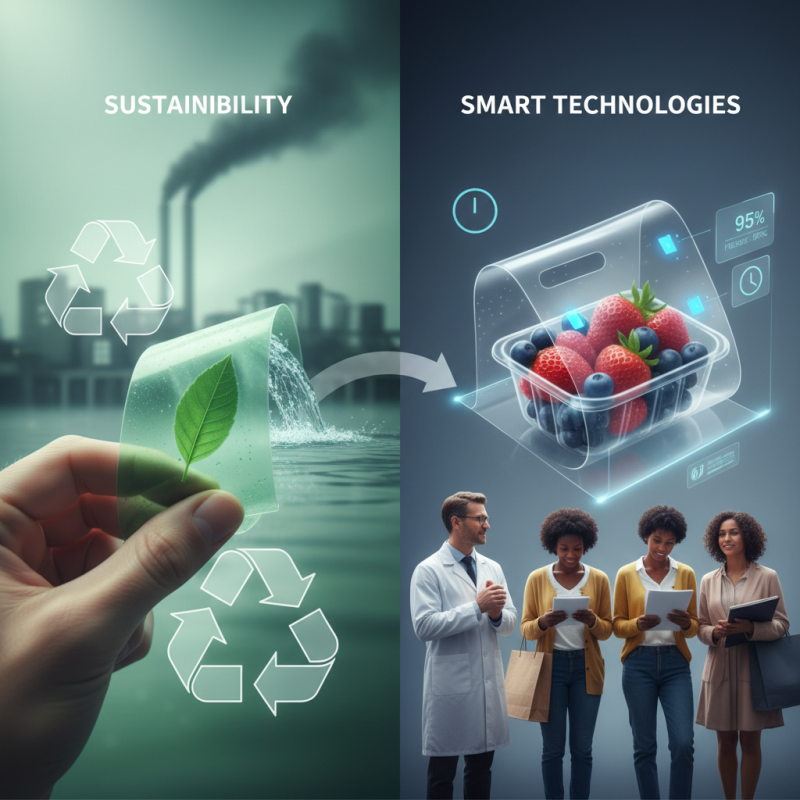
As we approach 2026, various trends emerge within the Polymer Film sector. Sustainability is becoming a priority. Companies are exploring bio-based films and recycling technologies. Each step brings us closer to reducing environmental impact. However, the journey is complex. There are challenges in production scale and material performance.
Another notable trend is the integration of smart technologies. Films equipped with sensors can monitor freshness in perishable goods. However, consumer acceptance remains uncertain. The Polymer Film industry must adapt and educate the market. Engaging stakeholders is key to a successful transition. The road ahead is filled with opportunities and obstacles alike. Each advancement prompts reflection on the balance between innovation and practicality.
Emerging Innovations in Polymer Film Manufacturing Techniques
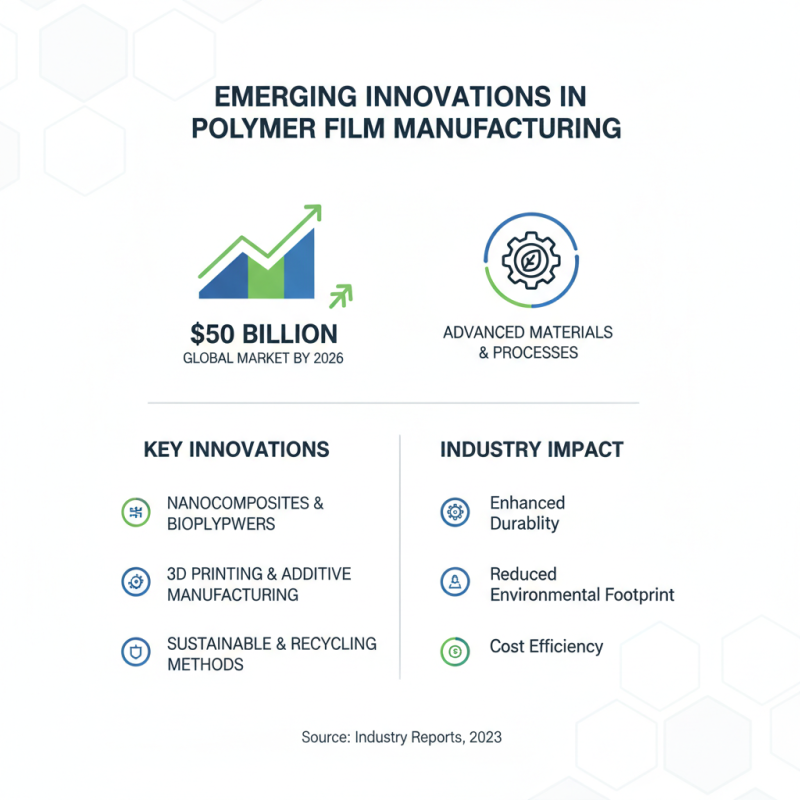
The polymer film industry is undergoing significant transformations. Innovations in manufacturing techniques are at the forefront. Reports indicate that the global polymer film market is projected to reach $50 billion by 2026. This growth is driven by advances in materials and processes.
One key innovation is the development of biodegradable films. These films reduce environmental impact. Researchers report that biodegradable polymer films can decompose within six months. This is a substantial improvement compared to conventional films, which can take centuries to break down. While this technology is promising, there are still challenges. The cost of production remains high, and scalability is a concern.
Another emerging technique is the use of nanotechnology. Incorporating nanoparticles into polymer films enhances properties like durability and barrier performance. Studies show that nano-reinforced films can be lighter yet stronger. However, there is ongoing debate around the potential health impacts of nanoparticles. Stakeholders must address both safety and environmental effects.
The future of polymer films lies in balancing innovation with sustainability. Manufacturers must consider the lifecycle of their products. The challenge is to create advanced films that meet consumer demands but don't harm the planet. This approach will shape the direction of polymer film technology in the coming years.
Sustainable Materials and Their Impact on Polymer Film Applications
The trend toward sustainable materials is reshaping polymer film applications. Biodegradable polymers are gaining popularity. Companies are exploring alternatives to traditional plastics. These materials can decompose naturally, reducing waste in landfills. For example, films made from cornstarch or other plant-based sources are promising. They break down faster than conventional polymers. However, the production of these materials can require significant resources.
Conducting life-cycle assessments is critical. It helps to evaluate the environmental impact of these new materials. Sometimes, these alternatives may have hidden costs. For instance, agricultural practices for sourcing raw materials can be resource-intensive. This raises questions about overall sustainability. The balance between innovation and ecological impact remains complex.
The move to sustainable materials is not without challenges. Consumer acceptance is a significant factor. Some people are still hesitant to switch from familiar plastics. They often associate traditional films with convenience and durability. Education and outreach will be essential for a smooth transition. The goal is to foster a market for sustainable polymer films that doesn't compromise on performance.
2026 Top Trends in Polymer Film Technology and Applications
| Trend |
Description |
Application Areas |
Sustainability Impact |
| Biodegradable Polymers |
Development of polymers that break down safely. |
Packaging, Agriculture |
Reduces plastic waste in landfills. |
| Nanotechnology Integration |
Incorporating nanoparticles to enhance properties. |
Electronics, Medical Devices |
Improves efficiency and reduces resource consumption. |
| Recyclable Materials |
Focus on materials that can be reused. |
Construction, Automotive |
Contributes to circular economy initiatives. |
| Smart Films |
Films that can change properties on demand. |
Architecture, Automotive |
Enables energy savings and improved user experience. |
| Sustainable Sourcing |
Using renewable resources for polymer production. |
Consumer Goods, Textiles |
Lowers the carbon footprint from production. |
Advancements in Functional Coatings for Polymer Films
The advancements in functional coatings for polymer films are transforming various industries. Recent innovations have led to coatings that enhance durability, functionality, and aesthetic appeal. For example, anti-fog and anti-reflective coatings are being developed for applications in packaging and display technologies. These coatings can significantly improve user experience by providing better visibility and preventing condensation.
Interestingly, the quest for sustainable solutions drives some of these advancements. Many manufacturers are exploring bio-based and recyclable materials for coatings. However, challenges remain in ensuring these coatings perform as effectively as their traditional counterparts. Some formulations may not yet meet stringent performance standards, prompting further research.
Moreover, while the potential of functional coatings is vast, performance inconsistencies can be an issue. Developing a coating that remains effective over time under various environmental conditions is complex. This inconsistency calls for rigorous testing and innovation. Seeking a balance between functionality and environmental responsibility remains a critical focus as the industry progresses.
Applications of Smart Polymer Films in Electronics and Packaging
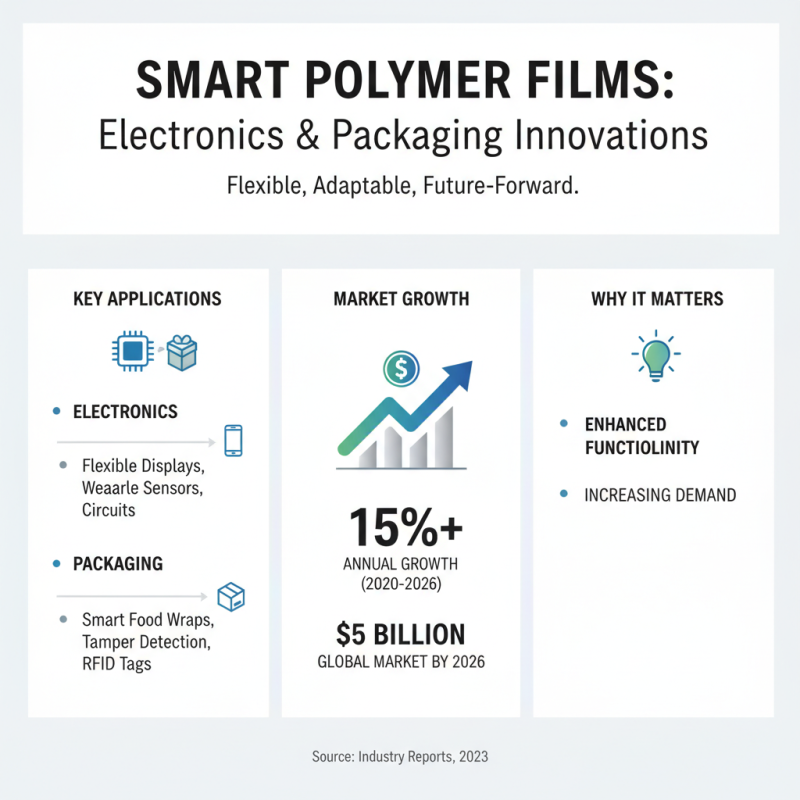
Smart polymer films are becoming crucial in electronics and packaging. Their flexibility and adaptability enhance functionality. Recent reports indicate that the global market for smart polymer films is expected to grow by over 15% annually, reaching approximately $5 billion by 2026. This growth reflects increasing demand across various sectors.
In electronics, these films provide unique properties like conductivity and sensing capabilities. They are used in light-emitting devices and flexible screens. Companies now explore integrating these films into wearables. However, challenges persist. The scalability of production remains a concern. Ensuring consistent quality can be difficult, leading to potential failures in applications.
Packaging sees significant innovation with smart polymer films, especially in food preservation. These films can respond to environmental changes, extending shelf life. However, challenges in biodegradability and recycling raise questions about their long-term sustainability. Despite promising advancements, the industry must address these issues. The future hinges on balancing innovation with environmental responsibility.
Future Market Trends and Predictions for Polymer Film Technologies
The polymer film technology market is evolving rapidly. Recent insights from market research indicate a projected growth rate of 5.3% annually through 2026. This growth is driven by diverse applications, including packaging, electronics, and automotive sectors. The demand for sustainable materials is influencing these trends significantly.
Emerging innovations are reshaping how we view polymer films. High-barrier films are becoming essential in food preservation. They offer extended shelf life and reduce waste. The electronics industry is also leaning towards thinner, more flexible films to improve device functionality. Reports show a 15% increase in adoption for portable electronics, highlighting a shift in consumer preferences.
However, challenges remain. There is ongoing concern about environmental impact. Biodegradable polymers are gaining attention, but they often face performance issues. Many manufacturers are still figuring out where to invest resources. This hesitation may slow down the overall progress in sustainable practices. Balancing innovation with eco-friendliness will be crucial.

 1Durch die gruppenweite Einführung und Harmonisierung unseres integrierten Managementsystems (IMS) werden alle bestehenden Unternehmens-, Qualitäts-, Umwelt- und Energiepolitiken durch diese Unternehmenspolitik ersetzt. Der Slogan „Textil hat Zukunft – auch in De