Why Choose a Petg Roll for Your 3D Printing Needs?
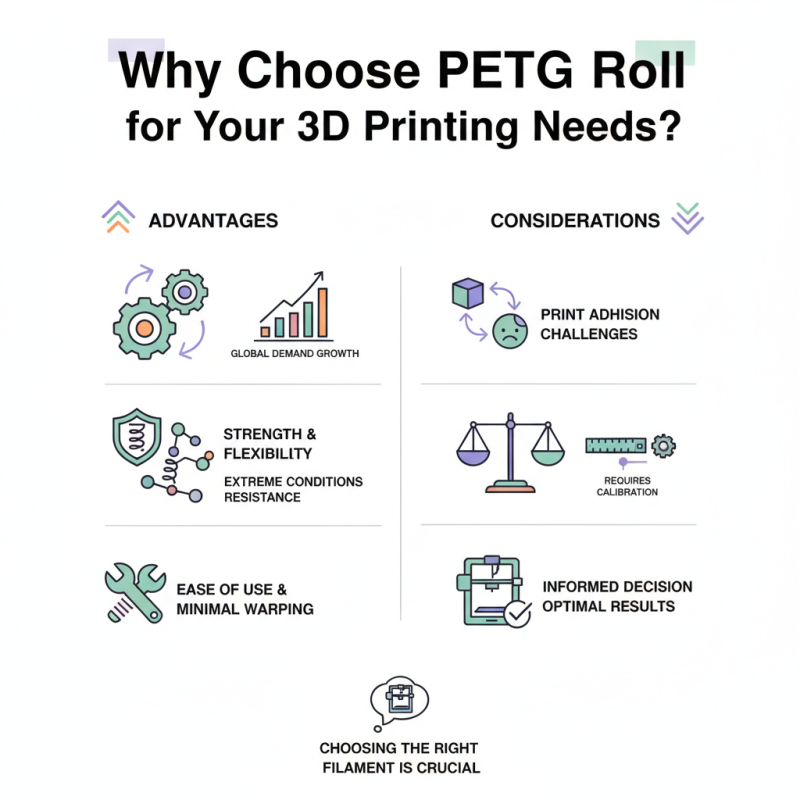
The evolution of 3D printing has led to diverse filament options, among which Petg Roll stands out. According to a report by SmarTech Analysis, the global demand for PETG materials in 3D printing is projected to grow at a CAGR of over 15% through 2025. Petg Roll is favored for its superior strength and flexibility, making it ideal for prototypes and functional parts.
Expert Dr. Sarah Thompson, a leading authority in 3D printing materials, states, “Choosing the right filament is crucial for achieving quality prints.” The unique chemical properties of Petg Roll allow it to withstand extreme conditions, enhancing usability in various applications. Makers and engineers often rely on this filament for its ease of use and minimal warping.
While Petg Roll offers several advantages, it's essential to acknowledge potential drawbacks. Some users report challenges with print adhesion, which may require additional calibration. Evaluating these factors can guide informed decisions, ensuring optimal results in 3D printing projects.
Understanding PETG: Properties and Benefits for 3D Printing
When considering materials for 3D printing, PETG stands out. This thermoplastic is a popular choice. Its strength and flexibility make it versatile for various projects. PETG is known for being easy to print, making it excellent for beginners and experts alike.
One of its key properties is durability. PETG can withstand impacts, which is essential for functional parts. Additionally, it has excellent layer adhesion. This means printed items are less likely to break under stress. The material also holds up well against moisture, making it suitable for outdoor applications.
Tips: Always ensure your printer's nozzle temperature is set correctly. Experimenting with different bed temperatures can help achieve better adhesion, too. While PETG generally has a low shrinkage rate, it's wise to monitor your prints closely. Inconsistent extrusion may lead to imperfections.
Although PETG possesses many advantages, it is not without challenges. It can string during printing, resulting in unwanted filament hairs. Adjusting the retraction settings can mitigate this issue. Similarly, achieving the right print speed is essential; too fast may cause defects. Finding the perfect balance can take time and patience.
Comparative Analysis: PETG vs. Other Common Filaments
Choosing the right filament for 3D printing can be a daunting task.
PETG is gaining popularity due to its remarkable qualities.
It combines the ease of use found in PLA with the strength of ABS.
While PLA is user-friendly, it can fracture under stress.
ABS is strong but has a tendency to warp.
PETG strikes a balance, offering durability without many of these drawbacks.
When comparing PETG to other filaments, consider factors like printability and appearance.
PETG prints smoothly, often without the need for a heated bed.
This filament provides a glossy finish and is resistant to moisture.
However, it can be stringy and may require fine-tuning of print settings.
It is essential to adjust your printing speed and temperature for optimal results.
Tips: Always perform a test print to find the best settings.
If you face stringing, reduce the retract distance.
Watching your prints closely helps in making quick adjustments.
Remember, every printer behaves differently.
What works for one may not work for another. Keep experimenting to find the perfect balance for your projects.
Applications of PETG in Various Industries
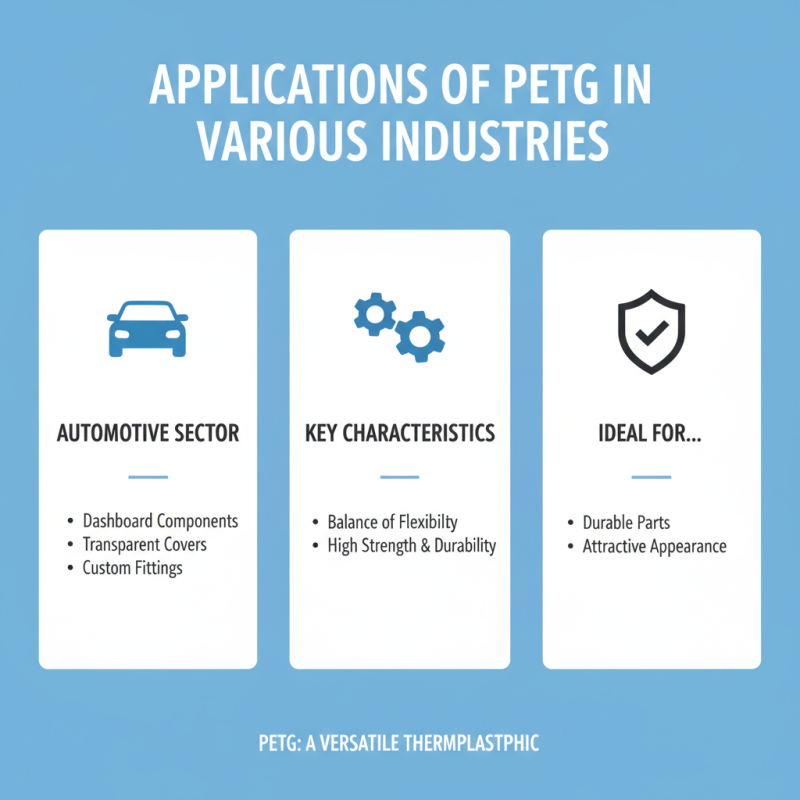
PETG is becoming a popular choice in various industries due to its impressive characteristics. This thermoplastic offers a perfect balance of flexibility and strength, making it ideal for many applications. In the automotive sector, PETG finds use in dashboard components, transparent covers, and even custom fittings. These elements require durability while maintaining an attractive appearance, which PETG provides effectively.
In healthcare, PETG is used to produce medical devices and packaging. Its clarity and chemical resistance are advantageous for containing sensitive equipment or pharmaceutical products. It is crucial for these applications to maintain sterility and integrity. However, it’s worth noting that while PETG has many benefits, it can also be challenging to print when optimal settings are not utilized. This can lead to warping or adhesion issues, which require careful attention during the printing process.
The food industry also benefits from PETG. The material is safe for food contact and can be used to create clear packaging that showcases products. Innovators often explore new ways to utilize PETG, but experimentation can lead to unforeseen challenges. Its recycling capabilities are another positive feature, giving it a sustainable edge. However, like any material, it’s essential to weigh its advantages and potential difficulties in practical applications.
Tips for Optimizing 3D Prints with PETG Filament
PETG filament has gained popularity for 3D printing due to its unique qualities. It combines the ease of use from PLA and the durability of ABS. PETG is resistant to impact and moisture, making it versatile for various applications. According to a report by the Additive Manufacturing industry, the use of PETG is expected to grow by 20% annually.
To optimize your 3D prints with PETG, maintain the right temperature settings. A nozzle temperature between 230°C and 250°C is often recommended. Bed temperatures ranging from 70°C to 80°C help with adhesion. Ensure that your print speed is moderate, around 40-60 mm/s, to achieve better layer adhesion.
Layer height is another critical factor. A height of 0.2 mm usually works well for balancing quality and speed. Consider using cooling fans for bridging and overhangs but avoid high cooling settings, as they might lead to warping. Observing these tips can significantly enhance the final output quality. However, be prepared for trial and error, as every printer behaves differently with PETG. Balancing these variables will lead to a more satisfying printing experience.
Why Choose a PETG Roll for Your 3D Printing Needs? - Tips for Optimizing 3D Prints with PETG Filament
| Feature |
Description |
Benefits |
| Durability |
PETG is known for its toughness and resilience. |
Ideal for functional parts that need to withstand stress. |
| Flexibility |
Offers flexibility without breaking easily. |
Provides better impact resistance compared to PLA. |
| Ease of Printing |
Minimal warping and good adhesion to the print bed. |
Great for both beginners and experienced users. |
| Temperature Resistance |
Resists deformation at higher temperatures. |
Suitable for parts exposed to heat, like automotive components. |
| Finish Quality |
Produces a shiny and smooth finish. |
Aesthetically pleasing results for visual models. |
Choosing the Right PETG Roll: Factors to Consider
Choosing the right PETG roll for your 3D printing projects requires careful consideration. PETG is a popular material due to its strength and ease of use. When selecting a roll, look closely at the diameter and weight. A standard roll typically weighs 1 kg. This can affect your project’s duration and budget.
Thermal properties are another important aspect. PETG can handle higher temperatures than PLA, making it suitable for various applications. It can warp less than ABS but may still require some tweaks. Check the manufacturer’s specifications for optimal printing temperatures. This helps in achieving better adhesion and minimizing issues.
Color choices can be overwhelming. PETG comes in both transparent and solid colors. This can influence your design significantly. Consider how the color interacts with light and the final look you want. Finally, evaluate the source of your PETG. Quality can vary. Reading reviews or seeking recommendations can guide your choice. These steps can ensure you select a roll that aligns with your needs.

 1Durch die gruppenweite Einführung und Harmonisierung unseres integrierten Managementsystems (IMS) werden alle bestehenden Unternehmens-, Qualitäts-, Umwelt- und Energiepolitiken durch diese Unternehmenspolitik ersetzt. Der Slogan „Textil hat Zukunft – auch in De