2026 How to Choose the Best Polyester Shrink Film for Your Packaging Needs?
When selecting the best Polyester Shrink Film for packaging, businesses face numerous choices. Polyester Shrink Film is favored for its durability and presentation quality. The global market for shrink films is projected to grow by 4.8% annually, reaching $14.5 billion by 2026, according to Smithers Pira. This data highlights the rising demand in various industries, from food and beverage to electronics.
Industry expert Dr. Emily Thornton states, “Choosing the right Polyester Shrink Film can enhance product appearance and boost shelf appeal.” Her insights reflect the importance of understanding specific packaging needs. Not every option available will suit every product. Variations in thickness, width, and material impact performance. Identifying the right attributes can be challenging.
Additionally, many companies overlook the environmental impact of their choices. Some Polyester Shrink Films are recyclable, which aligns with growing consumer preference for sustainable packaging. However, not all options are equal. Evaluating the environmental footprint is essential. Balancing cost-efficiency with quality and sustainability demands careful consideration. The process is not straightforward, and hesitation can lead to suboptimal decisions.

Understanding Polyester Shrink Film and Its Applications
Polyester shrink film is a versatile packaging material. It offers clarity, strength, and durability, making it suitable for various applications. Its ability to conform tightly around products enhances shelf appeal. This type of film is often used for bundles, pallets, and retail packaging. The visual appeal and protective qualities it provides are essential for many businesses.
However, choosing the right polyester shrink film can be challenging. Different thicknesses and shrink ratios are available. Businesses must weigh the benefits of each option. Consider the products you want to package. Do they require high visibility and protection? Are they temperature-sensitive? Additionally, it is important to evaluate the environmental impact of your choices. While polyester is recyclable, not all facilities accept it.
When selecting polyester shrink film, think about the overall user experience. Evaluate the durability during shipping and display. You may encounter issues with leaks or tears if the wrong film is chosen. Testing several options can be beneficial. It allows you to find the perfect fit for your specific needs.
2026 How to Choose the Best Polyester Shrink Film for Your Packaging Needs?
| Property |
Description |
Applications |
| Clarity |
High transparency that allows for excellent product visibility. |
Retail packaging, food products |
| Strength |
Durable and resistant to punctures and tears. |
Heavy-duty packaging, industrial supplies |
| Shrink Ratio |
Offers different shrink ratios to accommodate various packaging needs. |
Shrink wraps for bottles, bundles of products |
| Temperature Resistance |
Handles high and low temperatures without losing integrity. |
Frozen food packaging, heat-sensitive products |
| Eco-friendliness |
Made from recyclable materials, reducing environmental impact. |
Sustainable packaging solutions |
Key Factors to Consider When Selecting Polyester Shrink Film
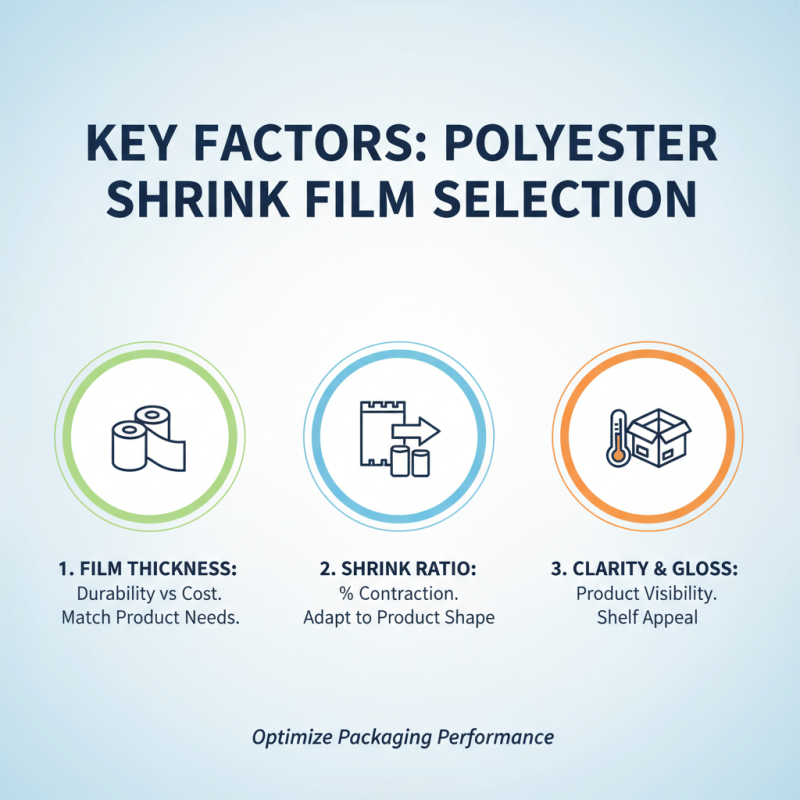
Choosing the right polyester shrink film for packaging is crucial. Several key factors can make a significant difference. One important aspect is the thickness of the film. Thicker films provide better durability and protection, while thinner options can reduce costs. It's essential to match thickness to the product being packaged.
Temperature resistance also matters. Different applications require films that can withstand various temperatures during the shrinking process. Films that fail to maintain integrity under heat can lead to damaged products. Therefore, considering the heat tolerance is necessary for effective packaging.
Additionally, clarity and printability are influences. High clarity films enhance product visibility, while printable options allow for branding opportunities. However, you need to balance aesthetics with functionality. A film may look appealing, but if it compromises strength, it won't serve its purpose. Always reflect on your specific packaging requirements before making a final decision.
Comparing Different Types of Polyester Shrink Film
When selecting polyester shrink film, it’s crucial to understand the variations available. Different types of polyester films offer unique benefits, which can greatly impact packaging efficiency. For instance, crystal-clear films provide excellent visibility, essential for retail products. They enhance the appeal of your items, making them more attractive to consumers.
On the other hand, perforated films enable breathability, reducing moisture buildup. This can be vital for perishable goods. However, the selection process demands careful consideration. Factors like thickness, shrink ratio, and sealing temperatures are key. It’s easy to get overwhelmed by choices, leading to hasty decisions. Take your time to evaluate each type against your specific needs.
Not all polyester films are created equal. Ensuring that the right film is chosen can save costs and enhance user experience. Reflecting on past purchases can highlight what worked and what didn’t. Some experiences may reveal issues such as inadequate sealing or less than expected shrinkage. It's essential to learn from these insights to optimize future selections.
Comparison of Different Types of Polyester Shrink Film
Evaluating the Performance Characteristics of Polyester Shrink Film
When selecting polyester shrink film, evaluating its performance characteristics is crucial. Look for clarity and gloss, as these attributes enhance product presentation. A clear film allows consumers to see the packaged item, which is particularly important for food and luxury products. Gloss creates an attractive sheen, elevating the perceived value of the product inside. However, balance is key; too much gloss might lead to reflections that obscure visibility.
Strength is another critical characteristic. A reliable polyester shrink film should withstand handling and transportation without tearing or puncturing. Test the material’s tensile strength to ensure it meets your durability requirements. Shrinkage rates also need consideration; films can shrink differently under heat. Matching the shrinkage rate to your packaging machinery is essential. Inadequate film shrinkage can result in loose packaging, while excessive shrinkage may distort the product.
Evaluate environmental resistance as well. Check if the film offers protection against moisture and UV rays. These factors can impact product freshness. While searching for optimal features, remain mindful of cost-effectiveness. Sometimes, a more expensive film provides the reliability and performance you need. Carefully assess each characteristic to find the right polyester shrink film for your packaging needs.
Best Practices for Packaging with Polyester Shrink Film
When selecting the right polyester shrink film for your packaging needs, understanding best practices is crucial. Polyester films are known for their durability and clarity. According to a report by the Freedonia Group, the polyester film market is projected to grow annually by 3.6% through 2025. This growth indicates a rising demand for effective and reliable packaging solutions.
Choosing the right thickness is essential. Thicker films offer better puncture resistance but may not shrink as tightly. A 50-micron film can provide an optimal balance between strength and flexibility. However, a thicker film can sometimes lead to less uniform shrinkage, which might affect product presentation. Testing different thicknesses on your products will help in determining the right fit.
Moreover, temperature control during the shrinking process is vital. Films should be heated evenly to avoid warping. Inconsistent temperatures may lead to shrinkage issues. Industry standards recommend using heat tunnels that maintain a consistent temperature range of 160 to 180 degrees Celsius. Adhering to these practices can significantly improve the performance and appearance of your packages.

 1Durch die gruppenweite Einführung und Harmonisierung unseres integrierten Managementsystems (IMS) werden alle bestehenden Unternehmens-, Qualitäts-, Umwelt- und Energiepolitiken durch diese Unternehmenspolitik ersetzt. Der Slogan „Textil hat Zukunft – auch in De