How to Choose the Right Laminating Film for Your Projects?
Choosing the right laminating film for your projects can enhance the quality and durability of your work. Laminating film comes in various types, each suited for different applications. It is essential to understand your specific needs to make an informed decision.
Different projects may require either thermal or pressure-sensitive laminating films, depending on the materials involved. For example, thermal laminating film provides a glossy finish, adding a professional touch. On the other hand, pressure-sensitive laminating film is easier to use, especially for quick tasks. Consider the thickness too; thicker films offer more protection but may be more challenging to handle.
When exploring options, examine product specifications and certifications. Look for quality indicators that ensure the film will perform as expected. Reflecting on your choice can lead to future improvements. Given the advancements in technology, such as AI for supplier selection, the process has become more streamlined. Yet, it is vital to keep in mind that every project has unique demands. So, take your time and choose wisely.
Understanding Laminating Film Types and Their Uses
Choosing the right laminating film can transform your projects. Understanding the different types of laminating films is essential. There are mainly two types: thermal and cold laminating films. Thermal films use heat to bond, while cold films adhere without heat. Depending on your project needs, each type offers unique benefits.
Thermal laminating films are often glossy. They provide a shiny finish, enhancing colors and text clarity. However, they are not suitable for heat-sensitive materials. Cold laminating films, on the other hand, are more versatile. They work well on various surfaces without the risk of warping or melting. This can be especially useful for delicate items.
When choosing, consider the project type. For example, a professional presentation may benefit from a glossy finish. In contrast, a map might require a matte film for easy readability. Sometimes, experimenting with different films may lead to unexpected results. It is all about what works best for you.
How to Choose the Right Laminating Film for Your Projects?
| Film Type |
Thickness (mil) |
Finish |
Best For |
| Standard Laminating Film |
3-5 mil |
Glossy |
Documents, Flyers |
| Heavy-Duty Laminating Film |
5-10 mil |
Matte |
ID Cards, Menus |
| Photo Laminating Film |
3-5 mil |
Glossy |
Photographs, Artwork |
| Cold Laminating Film |
1-3 mil |
Matte |
Sensitive Materials |
| Specialty Laminating Film |
3-5 mil |
Textured |
Unique Finishes |
Factors to Consider When Selecting Laminating Film Thickness
Choosing the right laminating film can significantly enhance your projects. One key factor is the thickness of the film. Thicker film provides more durability. It’s ideal for items that will see a lot of handling. For example, menus and brochures benefit from thicker film, while photos often use a thinner option.
Think about the specific use case. A thicker film may make a project feel bulky, which could be an issue for some applications. On the other hand, too thin a film can lead to wear and tear. It’s essential to strike the right balance based on the project requirements.
Consider the finish as well. Glossy films are popular for enhancing colors but may show fingerprints. Matte films reduce glare but can show scratches more easily. Test different finishes to see what works best. Ultimately, reflect on your project’s needs and the visuals you want to achieve.
How to Choose the Right Laminating Film for Your Projects?
Choosing Between Glossy, Matte, and Textured Finishes
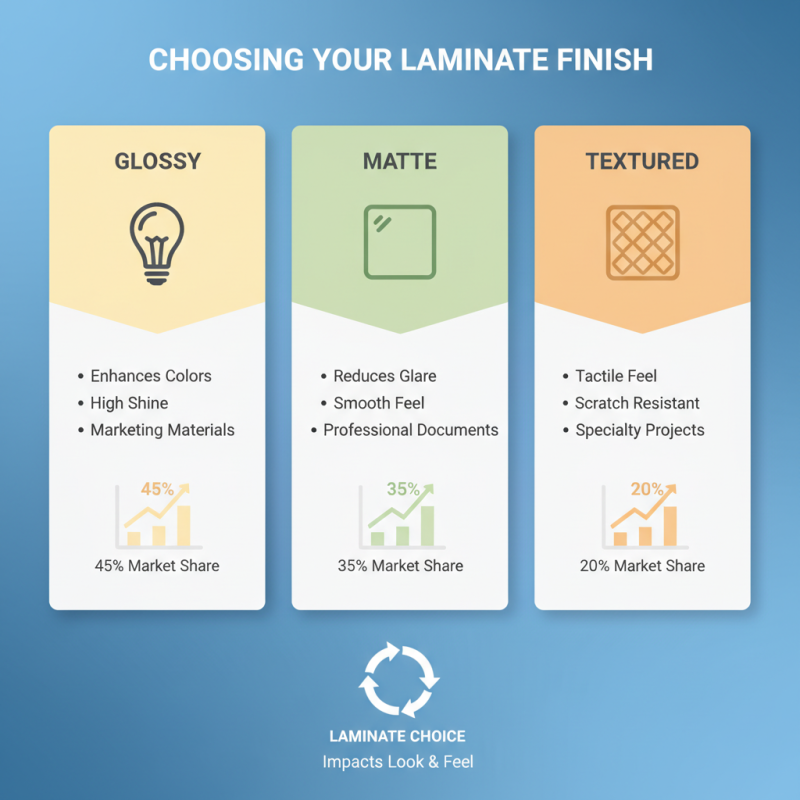
Choosing the right laminating film for your projects often comes down to selecting the finish. Glossy, matte, and textured finishes each have unique characteristics that impact the final look and feel of your documents. According to industry reports, glossy finishes account for approximately 45% of the laminating film market due to their vibrant, eye-catching appeal. They enhance colors and make images pop, which is beneficial for marketing materials. However, they can also create glare under bright lights, sometimes affecting readability.
Matte finishes offer a different experience. They have a sophisticated, non-reflective surface that aims for a sleek finish without the shine. This option is favored for professional documents, with around 35% of users preferring it for its elegant look. Matte finishes are ideal for writing on, yet they can smudge more easily compared to glossy films. It's important to note that the texture can influence the tactile experience as well. Textured finishes, although less common, provide a distinct feel and can improve grip, making them suitable for menus or brochures that need to stand out.
While choosing, consider the project's purpose carefully. Glossy films might draw attention but aren't always practical. Matte films blend in beautifully but could lack vibrancy. Textured options can be intriguing but may not always deliver the clarity of important text. Reflecting on these elements can lead to better choices tailored to your specific needs.
Evaluating Adhesive Options for Different Projects
When selecting an adhesive for laminating projects, it's crucial to consider the specific needs of each task. Different projects require different adhesive strengths. For instance, if you're laminating educational materials, a mild adhesive might suffice. It allows for easy removal without damage. However, for items that need to endure more wear, a strong adhesive is necessary.
Next, think about the substrates. Some surfaces are smooth, while others are textured. The adhesive must match these surfaces. A smooth surface can work well with a standard adhesive, but a textured one may need a specialty option. This match ensures that the lamination stays intact, which can be tricky sometimes. There’s always a chance that the chosen adhesive might not adhere as expected, leading to bubbling or peeling.
Consider also the environmental conditions where the laminated item will be used. If the item will be exposed to moisture or temperature extremes, a water-resistant adhesive is essential. However, many people often overlook this factor, only to find their projects failing under these conditions. Reflecting on past laminating experiences can help in choosing the right adhesive next time.
Ensuring Compatibility with Laminating Machines and Equipment
Choosing the right laminating film involves more than just aesthetics; compatibility with your laminating machine is crucial. Different laminators work with specific film types. For example, some machines require a higher quality film for a smooth finish, while others work best with standard thickness. Industry reports indicate that using incompatible film can lead to jams or poor laminating results.
Consider the thickness of the film you need. A common thickness is 3 to 5 mils, but certain projects may require thicker options for durability. Ensure your machine specifies compatible film thickness. Professional studies show that using the right film can increase the project lifespan by up to 30%. The wrong choice can lead to frustrating setbacks.
Also, always check the adhesive type. Not all films adhere the same way under heat; some may not bond as expected. This mismatch can result in bubbling or peeling. Prioritize films known for reliable performance. Using the right laminating film is essential, but it requires conscious decision-making. Take the time to review your machine’s compatibility before starting.

 1Durch die gruppenweite Einführung und Harmonisierung unseres integrierten Managementsystems (IMS) werden alle bestehenden Unternehmens-, Qualitäts-, Umwelt- und Energiepolitiken durch diese Unternehmenspolitik ersetzt. Der Slogan „Textil hat Zukunft – auch in De