10 Essential Tips for Choosing the Right Laminating Film
Choosing the right laminating film can significantly impact your projects. Industry expert Sarah Thompson emphasizes, "The quality of laminating film determines the durability of your final product." In a world where presentation matters, selecting a reliable laminating film is essential.
When evaluating options, understand the film's thickness and finish. Thicker films typically provide better protection. However, they may not suit all applications. Consider the intended use—professional documents may require a glossy finish, while educational materials might benefit from a matte look. Testing different films can offer crucial insights for your needs.
It's important to recognize that not all films are created equal. Some may yellow over time. Others might not adhere well, leading to bubbles or wrinkles. Reflecting on past experiences can guide better choices. Be mindful of these factors, as they can affect your work's long-term appearance and effectiveness.

Understanding the Different Types of Laminating Film Available
Choosing the right laminating film can be a daunting task. There are various types available, each with unique properties. Understanding these differences is vital for successful projects.
When selecting laminating film, consider the thickness. Thicker films generally provide more protection. However, they may not be suitable for all applications. A thin film might suffice for documents that are not frequently handled. This trade-off requires careful consideration of your specific needs.
Another essential factor is the finish type. There are glossy, matte, and textured finishes. Glossy films enhance color vibrancy but may show fingerprints easily. Matte films reduce glare, making them ideal for displays. Textured finishes add depth, perfect for creative projects. Test each finish to determine what works best for your materials.
Always check for compatibility with your laminator. Some films require specific machines. This oversight can lead to frustration and wasted materials. As you evaluate options, think about your intended use, the environment, and the durability needed. This reflection can guide you toward a more effective choice.
Evaluating the Thickness and Finish of Laminating Films
When selecting laminating films, thickness and finish are crucial factors. The thickness of the film influences durability. Common thicknesses range from 3 mil to 10 mil. Thinner films are suitable for everyday documents. They are flexible but less protective. Thicker films offer greater sturdiness. However, they may not always fold easily. It’s essential to consider the purpose of lamination when making your choice.
The finish of the laminating film also plays a vital role. Glossy finishes enhance colors but may glare under bright lights. Matte finishes reduce reflections and are easier to write on. They may not showcase images as vibrantly but provide a more professional look. Testing different combinations of thickness and finish can be worthwhile. It helps you determine what works best for your needs. Adjusting your choice based on specific projects is key.
Choosing the right film might seem simple. However, many overlook these details. More reflection on these aspects can lead to better outcomes. Understanding your specific requirements will make all the difference.
Assessing Adhesive Quality for Optimal Lamination Results
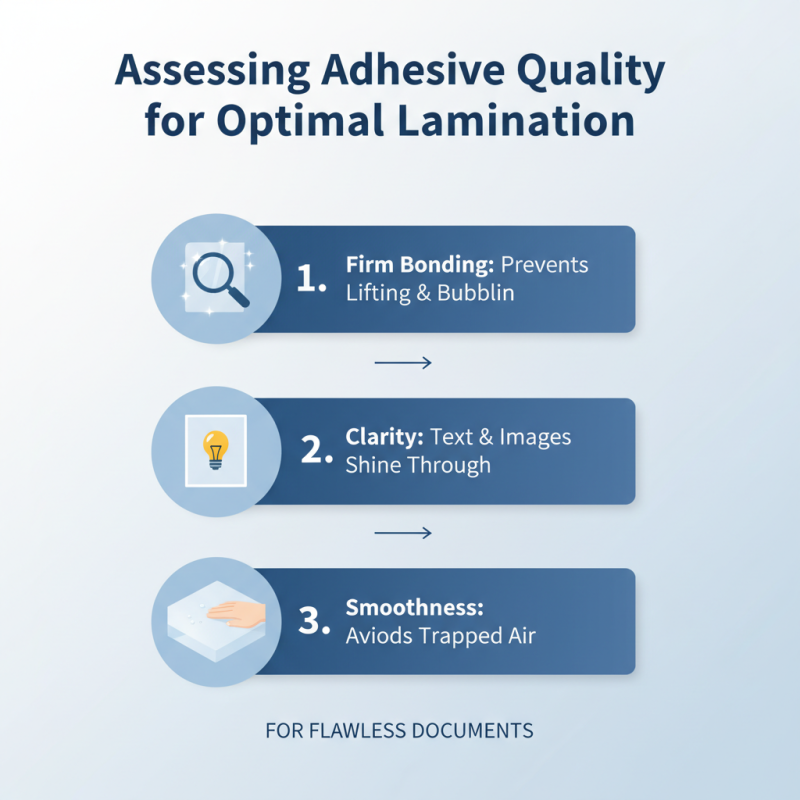
When choosing laminating film, assessing adhesive quality is crucial. A high-quality adhesive ensures that the film bonds firmly to the material. Poor adhesive can lead to lifting and bubbling, ruining the appearance of your documents. Check for clarity and smoothness. A clear film allows text and images to shine through. Smoothness prevents the adhesive from trapping air bubbles.
Understanding adhesive types is vital. Some films use hot melt adhesives, while others use pressure-sensitive adhesives. Hot melt options typically provide stronger bonds but may require more precise temperatures. Pressure-sensitive films are easier to use but can sometimes lack durability. Keep in mind that different materials react differently to adhesives, so always test beforehand.
Keep in mind the environment where the laminated items will be used. If they are exposed to moisture or heat, select a film designed to withstand these conditions. This ensures the adhesive maintains its integrity over time. Reflect on your previous choices. Sometimes, what seemed ideal didn’t perform as expected. Learning from past experiences can guide you toward making better selections in the future.
Determining the Right Size and Format for Your Project
When choosing the right laminating film, size and format are crucial. The proper dimensions ensure that your documents are fully protected. In fact, nearly 40% of laminating project failures stem from incorrect sizing. Using a film that’s too small may leave edges exposed. This can lead to premature wear and degradation. In contrast, over-sized film can create unnecessary bulk and may hinder the professional appearance you're aiming for.
Consider the format of your project. Industry reports indicate that approximately 30% of users overlook the importance of compatible format with existing equipment. A mismatch can cause heating issues or uneven lamination. It's vital to know the dimensions of your documents and the specifications of your laminator. Remember, the film's thickness also matters. Standard thickness ranges from 3 mil to 10 mil, with thicker films offering better durability. However, they may require more power and time for lamination. Evaluate your project needs carefully. Selecting the right size and format minimizes waste and enhances the final outcome, contributing to a polished presentation.
Considering Compatibility with Your Laminating Machine
When choosing laminating film, compatibility with your laminating machine is crucial. Not all films work well with every machine. Check your machine’s specifications before making a purchase. Look for details on optimal thickness and types of film it supports. A quick reference guide can save you time and frustration.
One tip is to consider the finish of the film. Glossy finishes enhance colors and visibility. Matte finishes reduce glare but may not be as vibrant. Test a small piece if you're unsure. Remember, a mismatch can lead to jams or uneven lamination.
Another important aspect is the film's thickness. Common options range from 1.5 mil to 10 mil. Thinner films are suitable for flexible projects, while thicker ones provide more durability. Balance your project needs with the film's capabilities. If it's a significant investment, ask for samples first. Each detail will ultimately impact the outcome, so choose wisely.
10 Essential Tips for Choosing the Right Laminating Film - Considering Compatibility with Your Laminating Machine
| Tip Number |
Tip |
Compatibility Aspect |
Recommended Thickness (microns) |
| 1 |
Check the laminating machine specifications |
Compatibility with film size |
75 - 125 |
| 2 |
Consider the type of project |
Standard vs. specialty films |
75 - 500 |
| 3 |
Evaluate the finish quality needed |
Glossy vs. matte finishes |
80 - 200 |
| 4 |
Ensure temperature compatibility |
Thermal vs. cold laminating films |
80 - 150 |
| 5 |
Check if the film is UV resistant |
For outdoor or high sunlight exposure |
100 - 250 |
| 6 |
Look for adhesive quality |
Permanent vs. removable adhesives |
90 - 300 |
| 7 |
Consider thickness for protection level |
Higher thickness gives more durability |
125 - 500 |
| 8 |
Assess the intended usage frequency |
Regular vs. occasional use |
80 - 150 |
| 9 |
Check environmental impact |
Recyclability and non-toxicity |
100 - 200 |
| 10 |
Consult user reviews and recommendations |
Real-life performance feedback |
Any applicable |

 1Durch die gruppenweite Einführung und Harmonisierung unseres integrierten Managementsystems (IMS) werden alle bestehenden Unternehmens-, Qualitäts-, Umwelt- und Energiepolitiken durch diese Unternehmenspolitik ersetzt. Der Slogan „Textil hat Zukunft – auch in De