
When it comes to selecting the right Polymer Film, expertise is key. A well-known figure in the industry, Dr. Anna Chen, emphasizes, "Choosing the right Polymer Film can significantly impact both performance and cost." Her insights remind us that this choice is not trivial.
Many factors affect your decision. Different films offer unique properties like durability, flexibility, and barrier capabilities. Understanding your specific needs is essential. Are you looking for films that can withstand higher temperatures, or do you need something more flexible?
It's easy to feel overwhelmed by the options available. Each type of Polymer Film comes with its pros and cons. This decision also affects production efficiency and material costs. Therefore, assessing your goals is critical. There’s no one-size-fits-all solution. Choosing wisely requires not just knowledge but also careful consideration of all available options.
Polymer films are versatile materials used across various industries. They serve critical roles in packaging, electronics, and medical applications. According to a recent market report by Smithers Pira, the global polymer film market is projected to reach $109 billion by 2024. This growth reflects the increasing demand for sustainable and high-performance materials. Understanding the different types of polymer films can significantly impact your choice.
For instance, polyethylene (PE) is known for its flexibility and moisture barrier properties. Polypropylene (PP), on the other hand, offers excellent clarity and is often used in food packaging. Yet, not all polymer films meet every requirement; some lack heat resistance and may not sustain prolonged exposure to UV light. This variability can lead to product failures if the wrong film is selected. It’s essential to evaluate the specific needs of your application, including factors like tensile strength and environmental resistance.
Additionally, recycled polymer films are gaining traction. Nearly 30% of consumers prefer brands that incorporate recycled materials. However, these films can sometimes compromise performance. Balancing sustainability with functionality is crucial. Choosing the right polymer film requires careful consideration of these factors to ensure optimal performance without overlooking sustainability goals.
| Tip | Description | Applications | Outdoor Durability |
|---|---|---|---|
| 1. Identify Your Application | Understand the requirements of your specific project. | Packaging, Agriculture, Electronics | Varies by type of film. |
| 2. Consider Thickness | Choose the right thickness for durability and barrier properties. | Packaging, Construction | Higher thickness usually means better durability. |
| 3. Evaluate Barrier Properties | Assess the barrier to moisture, gases, and odors. | Food packaging, Medical supplies | Critical for some applications. |
| 4. Check Thermal Properties | Temperature resistance for heat-sensitive applications. | Industrial uses, Electronics | Consider your environment. |
| 5. Research Chemical Resistance | Select films based on exposure to chemicals. | Laboratories, Packaging | Essential for safety. |
| 6. Assess Aesthetics | Consider color, clarity, and finish. | Consumer products, Branding | Influences consumer perception. |
| 7. Review Regulatory Compliance | Ensure films meet local regulations. | Food, Pharmaceuticals | Critical for market approval. |
| 8. Evaluate Cost-Effectiveness | Balance cost with quality and specification needs. | All industries | Essential for budgeting. |
| 9. Obtain Samples | Test materials in your specific conditions. | Pre-production testing | Real-world feedback. |
| 10. Consult with Experts | Leverage industry knowledge to make informed choices. | All sectors | Expert opinion can minimize risk. |
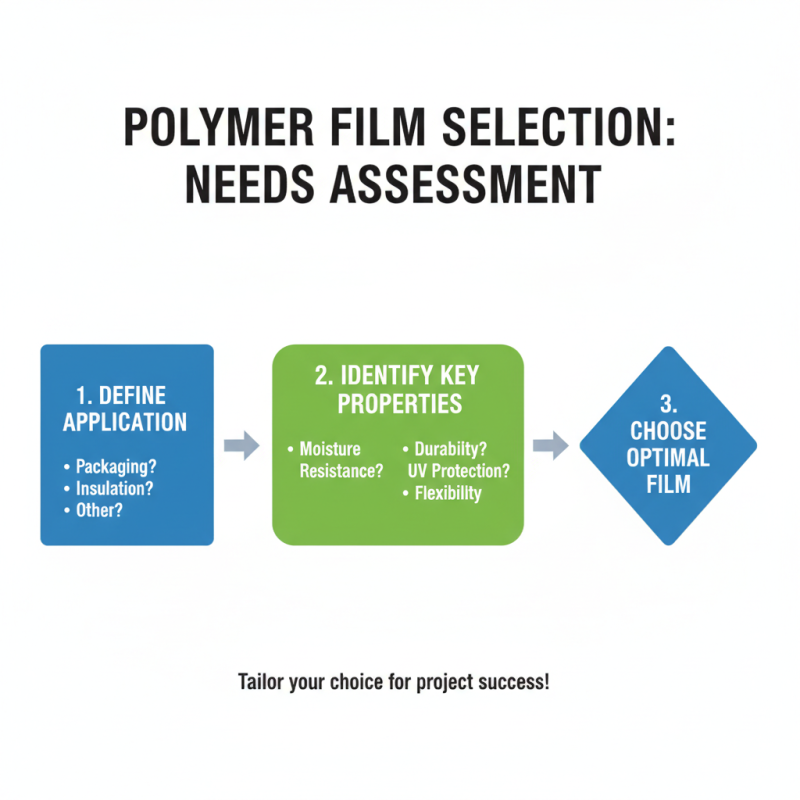
When selecting the right polymer film, it's crucial to identify your specific needs. Consider the application of the film. Will it be used for packaging, insulation, or another purpose? Different projects demand different properties. For instance, some films offer better moisture resistance, while others provide UV protection. These details can significantly impact your choice.
Think about the environmental factors as well. Will the film be exposed to heat or chemicals? Knowing this can guide you toward materials that can withstand harsh conditions. You may also want to consider the thickness of the film. Thicker films are often more durable, but they can also be heavier and less flexible. Reflect on budget constraints too; sometimes the most expensive option isn't necessary.
Last, remember that the market is full of options. It may seem overwhelming at first. Testing a few materials before making a final decision could be beneficial. Look for films that meet your criteria, but be prepared to make compromises. You might find a product that doesn't excel in every area but still meets your essential needs effectively.
When selecting a polymer film, the thickness is a crucial factor. Thinner films tend to be more flexible, but they may not hold up under stress. A film that’s too thick can be rigid and less adaptable to different applications. It's vital to match film thickness with your specific needs. Consider the environment in which the film will be used. For instance, outdoor applications often require more durability.
Flexibility and strength go hand in hand. A flexible polymer film can conform to various shapes, offering versatility. However, excessive flexibility might compromise strength. Consider how the film will be handled or processed. Many industries demand a balance. If flexibility is prioritized, the film should still maintain enough strength to withstand possible wear and tear. Reflect on your project’s requirements. Evaluating these properties will lead to better decision-making.
Choosing the right polymer film can be challenging. Each type has unique strengths and weaknesses. For instance, polyethylene is well-known for its flexibility and moisture resistance. A report by Transparency Market Research states that the polyethylene film market is projected to reach
$27 billion by 2027. This reliability makes it a popular choice for packaging applications.
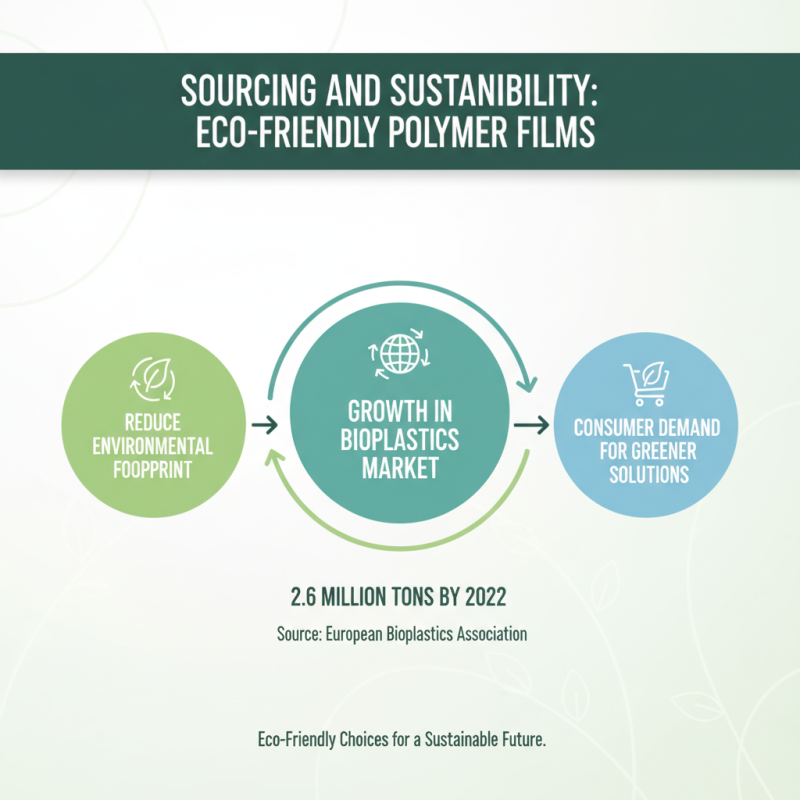
Choosing an eco-friendly polymer film is becoming increasingly important for businesses and consumers alike. Sustainable options can have a significant impact on reducing environmental footprints. According to a report from the European Bioplastics association, bioplastics market share is expected to grow to 2.6 million tons by 2022. This growth reflects a rising demand for greener solutions.
When selecting a polymer film, consider its sourcing. Look for products made from renewable resources. This can include films derived from plants or recycled materials. Many manufacturers are now offering biodegradable options. These films can break down more easily in the environment, a critical aspect as global waste concerns rise.
Tip: Always check certifications for sustainability claims. Ensure they are backed by recognized standards. Another tip is to assess the film's performance. Sometimes, cheaper, eco-friendly options might not meet quality requirements. Balance sustainability with durability. As consumer preferences shift, being mindful of these factors can lead to better choices.