10 Tips for Choosing the Best Pet Polyester Film for Your Projects?
When embarking on a project that requires Pet Polyester Film, making the right choice is essential. The film serves various applications, from packaging to electronic components. Selecting the best type can significantly impact your project's quality and durability.
Understanding the properties of Pet Polyester Film is crucial. This material boasts excellent tensile strength and chemical resistance. However, not all films are created equal. Some may not perform well in specific applications or environments. You're likely to encounter a range of thicknesses, finishes, and coatings. Each option has its own set of benefits and drawbacks.
As you navigate this decision, consider functionality, cost, and end-use requirements. It’s easy to overlook key details that can lead to problems later. You might be tempted to choose based on price alone, but that could backfire. Reflecting on your project needs will guide you toward the best decision.
Understanding Different Types of Pet Polyester Films Available
Pet polyester films are crucial in various projects, from packaging to electronics. They come in different types, each suited for specific applications. Understanding these types helps in making informed choices. For instance, biaxially oriented PET (BoPET) offers superior strength and thermal stability. This makes it an excellent choice for high-performance applications. Research from the Global PET Film Market indicates a growing demand for BoPET, projecting a CAGR of 6.5% from 2021 to 2028. Such data highlights its crucial role in the industry.
Another important type is anti-static PET film. Ideal for electronic components, they prevent electrostatic discharge. This feature is essential, given the rising complexity of electronic devices. A report from Market Research Future notes an increasing trend toward using such films in tech applications. These materials enhance reliability and longevity in electronic devices. However, awareness of potential environmental impacts is necessary. Some manufacturers struggle with eco-friendly options, raising questions about sustainability.
Thermal laminating films are also gaining traction. They provide moisture resistance, enhancing durability in packaging. Many projects require longer-lasting materials. However, users should be cautious. Not all thermal films offer the same quality. Assessing adhesion properties is essential for optimal performance. The variety in polyester films creates opportunities, yet it also demands careful evaluation of specific needs. Choosing the right type aligns your project with both performance and environmental considerations.
Comparison of Different Types of PET Polyester Films
Evaluating the Thickness and Durability of Polyester Films
When selecting polyester films for your projects, thickness and durability are crucial factors. Polyester film comes in various thicknesses, typically measured in microns. A thicker film generally offers better durability and resistance to wear. However, it may also be less flexible. Consider the specific demands of your project. A thicker film might be suitable for outdoor use where exposure to elements is a concern. On the other hand, a thinner film could work well for applications requiring precision and detail.
Durability goes beyond thickness. Look for films that can withstand temperature fluctuations and humidity. These factors can affect the integrity of the film over time. You might find that a film performs well initially but fails under prolonged stress. Testing the film in the environment it will be used can provide valuable insights. Small imperfections in the film, like bubbles or inconsistencies, can affect its strength. Being aware of these details will ensure that you make an informed decision based on your project needs.
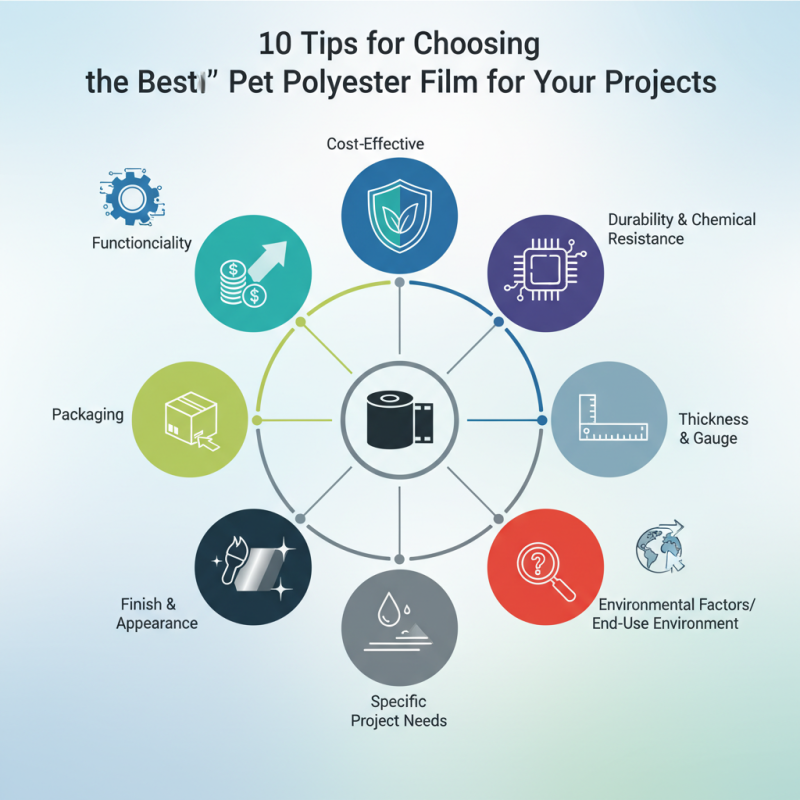
10 Tips for Choosing the Best Pet Polyester Film for Your Projects
| Tip Number |
Evaluation Criteria |
Suggestions |
| 1 |
Thickness |
Choose a thickness that suits your project's requirements (typically between 75 to 300 microns). |
| 2 |
Durability |
Look for films with high tensile strength for longer-lasting projects. |
| 3 |
Clarity |
Ensure the film offers excellent optical clarity for visual applications. |
| 4 |
Chemical Resistance |
Select films with good chemical resistance for packaging and labeling projects. |
| 5 |
Temperature Resistance |
Consider the temperature range your project will encounter. |
| 6 |
Surface Treatment |
Choose appropriate treatment, such as corona or plasma, for desired printability. |
| 7 |
Thickness Consistency |
Ensure uniform thickness to avoid production issues. |
| 8 |
Environmental Impact |
Consider eco-friendly options for sustainable projects. |
| 9 |
Cost-Effectiveness |
Evaluate the cost per unit for budget-friendly sourcing. |
| 10 |
Vendor Reliability |
Research suppliers for reliability and quality assurance. |
Identifying the Suitable Applications for Each Film Type
When selecting polyester films for your projects, understanding application suitability is essential. Each film type offers unique benefits. For instance, some films excel in moisture resistance, making them ideal for food packaging. Others are better suited for electrical insulation due to their high dielectric strength.
Consider the operational environment where the film will be used. UV-stabilized films are perfect for outdoor applications, as they withstand sunlight exposure. Conversely, softer films provide excellent conformability for items like labels or promotional materials. Reflect on your specific needs. Can the film handle temperature fluctuations? Is tear resistance crucial? These factors will significantly influence your choice.
You might find that not all films perform as expected in real-world scenarios. Some may not adhere properly or show signs of wear too soon. Testing a sample before full-scale use can prevent costly mistakes. Keep an open mind, and don’t hesitate to seek expert advice when unsure. Gathering insights from experienced users can help navigate the complexities of polyester film selection.
Comparing Cost-Effectiveness and Quality of Polyester Films
When selecting pet polyester films, cost-effectiveness and quality are paramount. Analyzing options can be daunting. It’s essential to weigh how much you’re willing to invest. Lower-priced films may save money upfront but could compromise durability. You might find issues like reduced tensile strength or inferior clarity. These factors can lead to increased costs over time.
Quality is not just about initial pricing. It often impacts the longevity and performance of your project. Higher-quality polyester films typically offer better scratch resistance and UV stability. They maintain their clarity and functionality longer. Look for specifications that outline these important features. Don’t hesitate to ask for samples. This gives you a tangible way to assess texture and thickness.
Be mindful that not all suppliers provide the same level of transparency regarding their products. Some might push for cheap alternatives but lack performance data. It’s crucial to research reviews and testimonials. Real-life experiences lend credibility and can help you avoid potential pitfalls. Always be ready to reassess your choices based on genuine feedback and performance metrics. Keep refining your criteria for the best fit.
Assessing Environmental Impact and Sustainability of Film Options
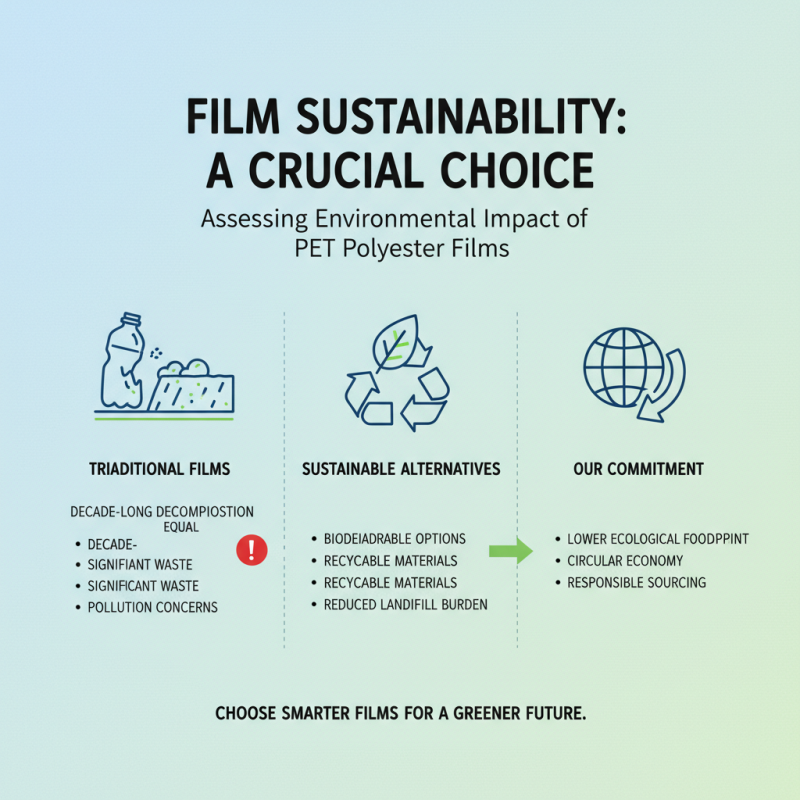
When evaluating pet polyester films, the sustainability of film options is crucial. These materials can impact the environment in numerous ways. Traditional films may take decades to decompose, leading to significant waste concerns. Opting for biodegradable or recyclable films is a step toward reducing this footprint. It's essential to recognize that not all film types are created equal.
Consider the production process and resource usage. Eco-friendly films often require less energy and water during manufacturing. They might use renewable resources, which is a positive aspect. However, some claims of sustainability can be misleading. It’s important to research the certifications behind these products.
Recycling capabilities also matter. If film options can be effectively repurposed, they contribute less to landfill issues. Users should ask about local recycling programs or collection systems. This information can be challenging to find. Industry standards for recycling vary greatly. Understanding these differences can lead to more informed choices. Striving for sustainable options can be complex but is vital for the future.

 1Durch die gruppenweite Einführung und Harmonisierung unseres integrierten Managementsystems (IMS) werden alle bestehenden Unternehmens-, Qualitäts-, Umwelt- und Energiepolitiken durch diese Unternehmenspolitik ersetzt. Der Slogan „Textil hat Zukunft – auch in De