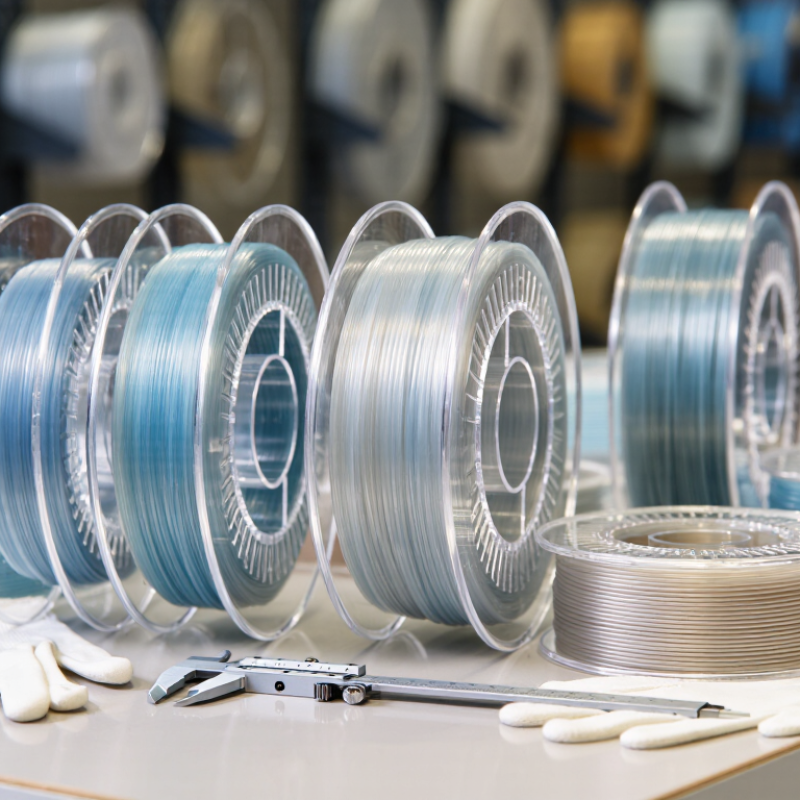

China has become an important sourcing destination for PETG sheet materials, including rolls used in packaging, printing, and thermoforming. Yet supplier capabilities vary. This guide introduces China-based PETG roll manufacturers and suppliers, helping buyers understand what to compare before requesting samples or quotations. A Petg Roll may look consistent at first glance, but thickness, width, surface finish, and winding quality can affect its performance on production lines.
Reliable evaluation starts with clear specifications. Ask suppliers about resin sourcing, production capacity, available gauges, color options, and tolerance controls. Request technical data sheets and recent sample rolls where possible. Check whether the material suits your forming or printing process, rather than relying on general product descriptions. Details matter. A supplier’s responsiveness and ability to explain quality checks can also reveal how well it understands practical production needs. Still, documents alone cannot confirm every detail; sample testing and direct communication remain useful.
The manufacturers and suppliers covered here should be assessed against your application, order volume, delivery expectations, and quality requirements. Compare more than headline pricing. Ask how rolls are packed, how defects are handled, and whether specifications can be documented consistently across repeat orders. Not every supplier page tells the whole story. Some details may need follow-up, and that is worth acknowledging. With careful comparison, buyers can build a shortlist based on verifiable information rather than broad claims, then confirm suitability through samples and specific technical discussions.
PETG roll stock is a clear, amorphous copolyester valued for impact resistance and easy thermoforming. CAMPUS polymer data and typical technical specifications place its density near 1.27 g/cm³ and glass-transition temperature around 80°C. Values vary by grade, thickness, and test method, so buyers should check the material’s own data sheet. In production, PETG can be heated and formed into shallow trays or curved display covers without the brittle feel of some clear plastics. It also cuts and prints well. Not effortless, though. Scratches show readily, and prolonged heat can deform finished parts.
Common uses include packaging inserts, point-of-sale displays, protective covers, and formed containers. These applications benefit from clear viewing and straightforward fabrication. OECD’s Global Plastics Outlook (2022) estimates that packaging accounted for 40% of global plastic waste in 2019. That figure covers plastics broadly, not PETG alone, but it highlights why material selection and scrap control matter. For roll converters, practical checks include consistent thickness, clean edges, and stable feeding through forming equipment. PETG’s chemical resistance is useful for many everyday products, yet it is not universal; cleaners and process conditions can affect clarity or strength. Test a sample under real use. A small trial often catches problems that a specification sheet misses.
China’s PETG roll manufacturing landscape includes large extrusion plants and smaller converting workshops. Their capabilities differ in line width, thickness control, surface finish, and order volume. Some suppliers handle extrusion, slitting, and packaging in one facility. Others rely on partners for later steps. The picture is not perfectly uniform.
PETG rolls are used in applications such as display components and thermoformed packaging. Buyers often compare thickness tolerance, roll-edge quality, winding consistency, and clarity. Ask for a recent production sample, not only a catalogue sheet. Check whether the sample matches the intended forming process. Small variations matter. A roll that looks clear under office lighting may show haze or marks after forming.
Supplier evaluation also benefits from specific process questions. Ask how operators monitor temperature, inspect roll surfaces, and record batch measurements. Request details on core size, maximum roll weight, and protective wrapping. These affect storage and transport. A written specification helps both sides identify changes between batches. Still, paperwork cannot replace a physical trial. Manufacturing capability may look convincing, yet communication and follow-up deserve equal attention. The supply landscape is broad, and a careful test order can reveal gaps before larger commitments.
Leading PETG roll manufacturers and suppliers in China serve packaging, printing, and thermoforming needs with different thicknesses, widths, and surface finishes. A useful supplier conversation starts with the application: Will the sheet be heated, folded, printed, or cut into clear components? Share target dimensions and forming conditions, not just a material name. Small details matter. Consistent winding, clean edges, and clear labeling can make a roll easier to handle on a production line.
Ask for technical data on thickness tolerance, clarity, impact performance, and recommended processing temperatures. Request a sample roll or trial sheet before confirming a large order; check for haze, scratches, and uneven gauge under the same lighting used in your workshop. A supplier’s response to a specific test result can reveal more than a polished catalog. Packaging also deserves attention: rolls should be protected from dust and edge damage during storage and transport.
Price alone is a weak comparison. Confirm minimum order quantities, lead times, available customization, and how quality issues are documented. Not every supplier will suit every process, and even clear specifications leave room for variation. That is an inconvenient truth. Keep records of sample results and approved tolerances, then review them against delivered rolls.
China’s PETG roll suppliers should specify thickness tolerance, usable width, roll diameter, core size, and surface finish. These details affect feeding, trimming, and forming on the buyer’s line. ASTM D882 can guide tensile testing, while ASTM D1003 measures haze and light transmission for clear sheet. Ask for results tied to the delivered production lot, not only a general data sheet. Plastics Europe’s Plastics—The Fast Facts 2024 reports global plastics production of 413.8 million tonnes in 2023; that broad figure shows the scale of the materials sector, not PETG output specifically. Precision still matters.
A dependable quality plan includes documented inspection, lot identification, and retained samples. ISO 9001 supports consistent quality-management processes, but it does not certify a roll’s performance by itself. Buyers can request a certificate of analysis and agree on test frequency before production. Custom options may include color, matte or gloss finish, corona treatment, antistatic properties, and cut-to-width winding. Confirm that additives suit the intended forming and printing process. One practical weakness: samples may run smoothly while full rolls reveal edge curl or uneven tension. Test a production-length roll when possible, and record acceptable limits in the purchase specification.
Commonly offered PETG sheet and roll thickness examples. Availability and tolerances vary by product grade and supplier; confirm specifications before ordering.
Thickness is a key customization choice: thinner material is generally more flexible, while thicker material provides greater rigidity. Request the supplier’s thickness tolerance and test documentation for the selected grade.
When sourcing PETG rolls from China, define the application before comparing quotations. A roll for thermoforming may need different thickness, width, and surface requirements than one used for printing. Share a written specification, including thickness tolerance, roll diameter, core size, and acceptable clarity. Ask suppliers how they measure these properties and request recent inspection records. A sample is useful, but test it on your own equipment. Check feeding, heating, forming, and surface consistency. Small details matter.
Evaluate the supplier’s process, not just the price. Ask about raw-material traceability, production capacity, defect handling, and how each batch is identified. Request photos of roll protection and pallet packing; crushed edges can make a good sheet difficult to use. Confirm lead time, payment milestones, shipping terms, and what happens if delivered rolls fall outside agreed specifications. Keep the requirements in writing. Clear records help both sides resolve problems. One caution: a polished sample does not prove every production run will match. Compare samples with batch records, and ask for clarification when an answer is vague. I would also leave room for a trial order; it may cost more per roll, but can reveal issues before a larger commitment.