2026 Best Petg Sheet Guide for Your Projects and Applications?
In recent years, the demand for quality materials has surged, especially in the realm of manufacturing. One notable product is the Petg Sheet. Industry expert Dr. Emily Carter asserts, "Choosing the right Petg Sheet can significantly impact your project's success." Her words highlight the importance of material selection in achieving desired outcomes.
Petg Sheets are known for their versatility and durability. They are suitable for various applications, including packaging, signage, and 3D printing. However, not all Petg Sheets are created equal. Understanding their specifications is crucial for making informed decisions. Consider factors like thickness, clarity, and UV resistance when choosing.
While many users appreciate Petg Sheets for their easy fabricability and strength, some may encounter challenges. Issues like warping or improper adhesion can arise. These aspects require careful consideration, reminding users to evaluate their specific needs thoroughly. Striking the right balance between quality and application is essential for success in your projects.
Understanding PETG Sheets: Characteristics and Benefits
PETG sheets are gaining popularity due to their unique characteristics. They are known for being durable and impact-resistant. This makes them suitable for various applications, from packaging to 3D printing. Unlike other plastics, PETG is more flexible. It can withstand stress without cracking. This property is essential for projects requiring longevity.
The benefits of PETG sheets extend beyond just toughness. They are also relatively easy to work with. Cutting and shaping PETG sheets can be done with standard tools. However, one must be cautious of overheating during machining. This can lead to warping. Additionally, PETG has a good level of clarity and can be colored as needed. This enhances its aesthetic appeal for display applications. Yet, the challenge lies in maintaining its surface quality. Scratches may appear more easily than on some harder plastics.
Understanding these characteristics is vital for effective use. While PETG sheets are versatile, they require careful handling. Users might need to experiment with techniques to achieve the desired finish. This trial-and-error process can lead to better results in the long run. Assessing both advantages and limitations is key to utilizing PETG sheets effectively.
2026 PETG Sheet Characteristics Comparison
This bar chart illustrates the key characteristics of PETG sheets, rated on a scale from 1 to 10. The ratings cover transparency, impact resistance, chemical resistance, flexural strength, and temperature resistance, showcasing the material's advantages for various applications.
Types of PETG Sheets for Various Applications
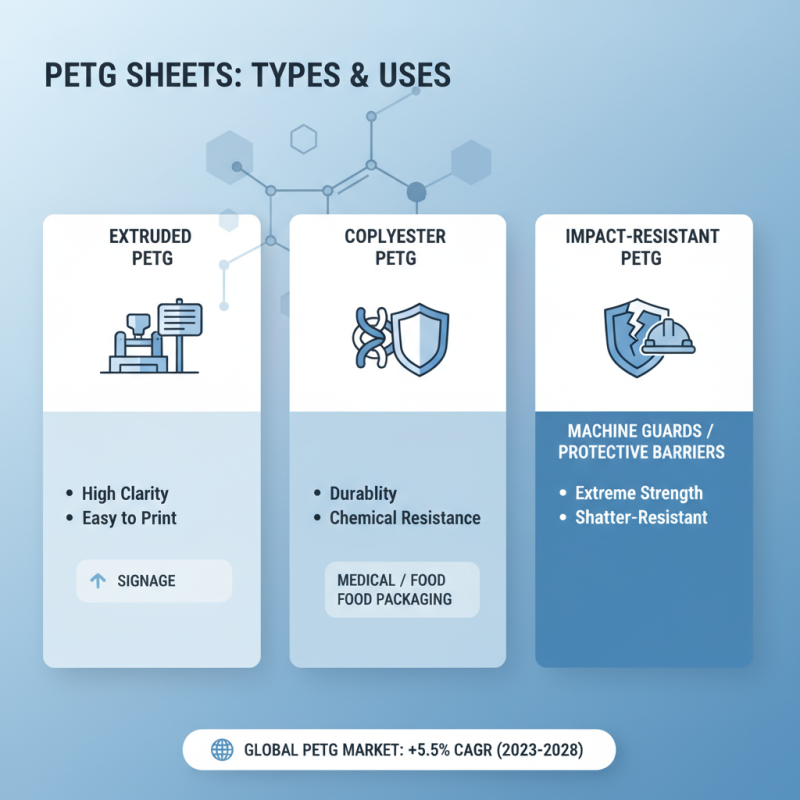
PETG sheets are versatile materials widely used across various industries. Understanding the types of PETG sheets can elevate your project outcome. Common types include extruded, copolyester, and impact-resistant variants. Each type serves specific purposes. For instance, extruded PETG is popular in signage due to its clarity and ease of printing. According to the Global PETG Market Report, this segment is expected to grow at a CAGR of 5.5% between 2023-2028.
In packaging applications, copolyester PETG is favored for its durability and chemical resistance. This type provides excellent barrier properties, making it suitable for food packaging. The flexible nature of these sheets allows them to form complex shapes easily. However, it's vital to assess the environmental impact, as some products may not be fully recyclable. Missteps in material selection can lead to waste and increased costs.
Impact-resistant PETG is essential for protective applications. Industries often choose it for safety equipment and protective barriers. It can withstand significant force, but clarity can diminish with improper handling. Research suggests that while PETG excels in many applications, users should be mindful of its limitations. A deeper understanding of these nuances leads to better decisions in material usage.
Choosing the Right Thickness and Size for Your Projects
Choosing the right thickness and size of PETG sheets can significantly impact your projects. Different applications require specific attributes. Thicker sheets are sturdier and provide better impact resistance. For structural applications, 3mm to 5mm thickness is often ideal. However, if flexibility is essential, thinner options can be more suitable.
Measurement accuracy is crucial when selecting sheet size. Common dimensions like 1220 x 2440 mm may fit standard projects. But custom sizes often yield better results for unique designs. Keep in mind, cutting large sheets can introduce flaws. Always double-check dimensions before purchasing.
Reflecting on your project needs is vital. How will you use the final product? Understanding the application will guide you in selecting the perfect thickness and size. Consider prototypes to test various options. Learning from these experiments can refine your approach over time.
2026 Best Petg Sheet Guide for Your Projects and Applications
| Thickness (mm) |
Size (mm) |
Recommended Applications |
Impact Resistance (J) |
Temperature Tolerance (°C) |
| 1.5 |
600 x 400 |
Signage, Art Projects |
7 |
60 |
| 2.0 |
500 x 500 |
Displays, Shelving Units |
9 |
65 |
| 3.0 |
1200 x 600 |
Industrial Applications, Protective Covers |
12 |
70 |
| 4.0 |
2000 x 1000 |
Automotive Parts, Safety Shields |
15 |
80 |
| 5.0 |
1000 x 1000 |
Transparent Walls, Vibrant Backdrops |
20 |
85 |
Best Practices for Cutting and Processing PETG Sheets
When working with PETG sheets, proper cutting and processing techniques are essential. Start by using a sharp blade or a laser cutter. A dull blade can lead to uneven edges and a poor finish. Make precise measurements to avoid waste. Slow and steady cutting will help maintain accuracy and control.
Tip: Always wear protective gear. Cutting PETG can create sharp edges and small particles. Safety goggles and gloves are highly recommended.
When it comes to drilling holes in PETG, use a slower drilling speed. High speeds can cause the material to melt or warp. Make sure to use appropriate drill bits that suit the thickness of your sheet. Cooling the area with water can reduce heat buildup and improve your results.
Tip: Test on scrap pieces first. This allows you to refine your technique before beginning on your main project. It’s easy to skip this step, but it pays off in the long run.
Finishing edges is also important. Sanding can provide a polished look but can also create scratches if not done carefully. Use fine-grit sandpaper, and don’t apply too much pressure. Balancing the pressure is often a point of frustration, but practice makes perfect.
Maintenance and Care Tips for Longevity of PETG Products
PETG (Polyethylene Terephthalate Glycol) is a popular material due to its durability and ease of use. However, maintaining its longevity requires specific care practices. Regular inspection is crucial for detecting wear and damage.
Avoid exposure to varying temperatures, as extreme heat can warp PETG sheets. This material is sensitive to UV light, leading to discoloration over time.
Keeping PETG items in shaded areas can prevent premature aging.
Cleaning is another key aspect of PETG maintenance. Use mild soap and water for routine cleaning. Harsh chemicals can degrade the surface.
A 2022 industry report highlighted that improper cleaning methods can shorten the lifespan of PETG products by up to 30%.
Instead of abrasive scrubbers, opt for soft cloths. Drying PETG with a lint-free towel reduces streaks and potential scratches.
Proper storage is essential too. Keep PETG sheets flat and in a cool, dry place. Stacking them carelessly can lead to bending or warping.
Maintaining an optimal environment slows down the degradation process significantly.
Experts suggest that these simple yet effective practices can lead to an increase in the functional lifespan of PETG products by over 50%.

 1Durch die gruppenweite Einführung und Harmonisierung unseres integrierten Managementsystems (IMS) werden alle bestehenden Unternehmens-, Qualitäts-, Umwelt- und Energiepolitiken durch diese Unternehmenspolitik ersetzt. Der Slogan „Textil hat Zukunft – auch in De