China has become a major production base for Pet Polyester Film, serving packaging, electronics, labeling, solar, and industrial markets. Its supplier landscape is broad, but quality varies between factories, trading companies, and integrated manufacturers. This guide examines China Top 10 Pet Polyester Film Suppliers? through practical purchasing criteria, not marketing claims alone.
Industry research supports this growing demand. Smithers’ report, The Future of PET Packaging to 2028, highlights continued PET consumption in lightweight packaging and high-performance applications. Grand View Research also identifies packaging, electrical insulation, and specialty films as important growth areas for polyethylene terephthalate products. These trends create opportunities, but they also increase pressure on thickness control, surface treatment, clarity, tensile strength, and delivery consistency.
Details matter.
A reliable supplier should provide technical data sheets, batch records, coating information, and relevant quality certifications. Buyers should also verify actual production capacity, inspection equipment, export experience, and complaint-handling procedures. A glossy website proves very little. Sample testing remains essential. Film that performs well in a factory trial may behave differently during high-speed printing, lamination, slitting, or thermal processing.
This supplier comparison considers product range, manufacturing capability, customization, certifications, lead times, and customer feedback. It also recognizes an uncomfortable limitation: public information is often incomplete, outdated, or carefully polished. Therefore, the ranking should be treated as a research starting point, not a final purchasing decision. Direct audits and independent testing still matter.
PET polyester film is a thin, strong sheet made from polyethylene terephthalate. It is produced by melting polymer resin, stretching the sheet, and controlling its thickness. This process improves strength, clarity, and dimensional stability. In practical converting work, film may feel light, yet it resists tearing during cutting and laminating.
Manufacturers use PET film for packaging, labels, insulation, release liners, and protective surfaces. Its smooth surface supports clean printing and adhesive coating. It also performs well across moderate temperature changes. A transparent grade can display printed graphics clearly, while a matte grade reduces glare on labels and panels. Thickness matters. A thin film saves material, but a thicker film usually offers better stiffness and handling.
PET film is not perfect. Moisture, heat, surface energy, and storage conditions can affect performance. I have seen films curl when tension is poorly controlled. That detail is easy to overlook. Buyers should check thickness tolerance, tensile strength, haze, shrinkage, and corona treatment before selecting a supplier. Test rolls often reveal problems that specifications hide. Supplier rankings may attract attention, but consistent quality, traceable testing, and responsive technical support matter more during production. Scrap rates, coating adhesion, and actual delivery reliability deserve equal review.
China Top 10 Pet Polyester Film Suppliers? How to Evaluate PET Film Suppliers in China
China’s PET film market requires more than a low quotation. Grand View Research valued the global PET film market at about USD 9.83 billion in 2023. It also forecasts a 5.1% compound annual growth rate from 2024 to 2030. This growth attracts many converters and trading companies. Buyers should verify whether a supplier actually controls extrusion, coating, slitting, and quality inspection.
Request production records, not only certificates. Check thickness tolerance, tensile strength, elongation, haze, surface energy, and coefficient of friction. ASTM D882, D1003, and D1894 offer useful testing frameworks. A practical sample should include several rolls, different widths, and clear lot numbers. Measure winding tightness and edge quality after transport. Small defects matter. One loose edge can damage an entire laminating run.
Audit traceability from resin intake to final packing. Ask for recent inspection reports, calibration records, corrective-action files, and environmental controls. ISO 9001 certification supports process discipline, but it does not guarantee consistent PET film. The 2024 Smithers packaging outlook also highlights recycled content and supply-chain transparency as growing purchasing concerns. Confirm recycled content with documented evidence and test results. My checklist is not perfect; an impressive factory tour can still hide unstable coating performance. A second-order trial, witnessed testing, and written tolerances provide stronger evidence than polished presentations.
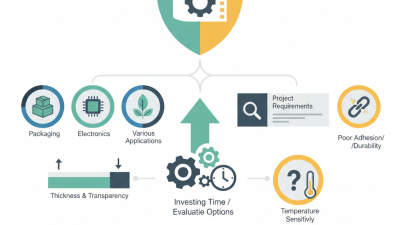
The chart presents a suggested evaluation weighting for PET polyester film suppliers. Quality consistency and technical capability receive the highest weight because PET film applications commonly require controlled thickness, tensile strength, elongation, haze, surface treatment, and dimensional stability. Buyers should verify supplier claims through samples, inspection records, test reports, and audits against relevant quality and material-testing requirements.
China has become a major production base for PET polyester film, serving packaging, electronics, labels, and industrial insulation. Smithers’ 2024 outlook indicates that global BOPET film demand may exceed 5 million tonnes before 2028. China contributes a substantial share of this capacity, supported by integrated polymer production and large-scale coating lines.
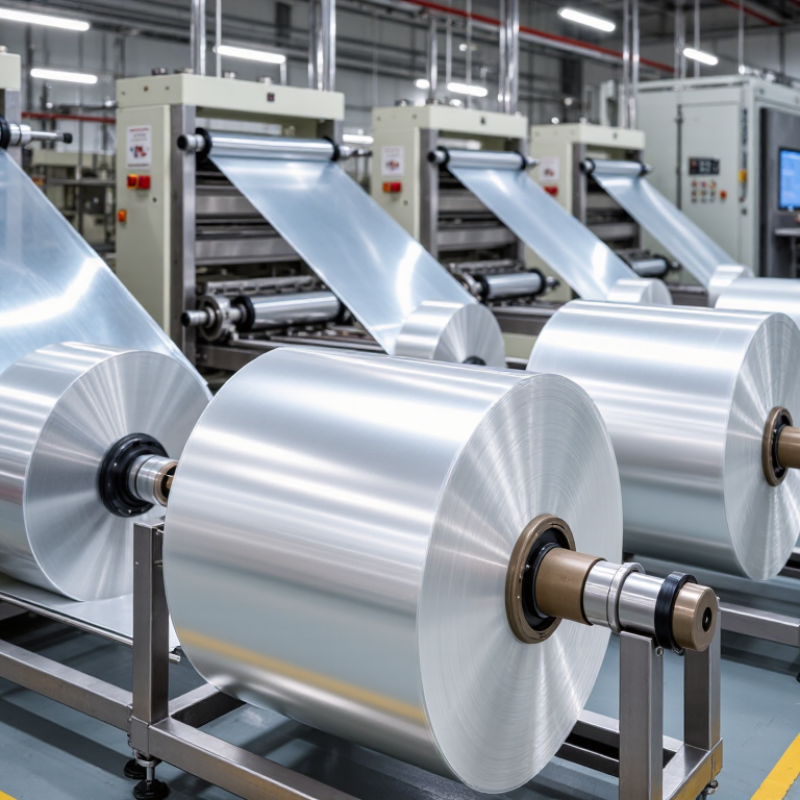
The leading ten suppliers should be judged by measurable performance, not production volume alone. Important indicators include annual output, film thickness tolerance, tensile strength, haze, heat shrinkage, and roll consistency. Grand View Research reports that the global PET films market continues to expand through packaging and electrical applications. Suppliers with clean-room coating systems can offer more stable surfaces for metallization, printing, and adhesive lamination. That difference is visible on the production floor.
Very thin film exposes weaknesses.
A practical review should also examine export experience, testing procedures, energy management, and complaint response time. ISO 9001 certification helps, but it cannot replace batch records or independent testing. I have seen specifications look excellent while edge damage appeared during slitting. That risk deserves attention. China’s top suppliers often provide customized widths, corona treatment, heat-sealable grades, and recycled-content options. However, recycled content may affect clarity and mechanical strength, depending on the process. Buyers should request recent test reports, sample rolls, and performance data under actual converting conditions before making a ranking decision.
Sources: Smithers, The Future of BOPET Films to 2028; Grand View Research, Polyethylene Terephthalate Films Market Report.
A practical review of China’s top ten PET polyester film suppliers should examine more than production volume. Smithers’ The Future of BOPET Films to 2028 identifies flexible packaging, electrical insulation, and solar applications as major demand areas. Mordor Intelligence also expects the global BOPET film market to expand at a mid-single-digit CAGR through 2029. These figures support continued investment in high-performance films.
Key products include transparent, matte, metallized, heat-sealable, and coated PET films. Packaging converters need stable thickness, strong barrier coatings, and reliable print adhesion. Electrical manufacturers usually require clean surfaces, controlled shrinkage, and high dielectric strength. Solar component producers may request weather-resistant films with precise coating uniformity. The best suppliers typically operate wide-width tenter-frame lines, online thickness gauges, clean coating rooms, and slitting systems for narrow rolls. Some also provide corona treatment, surface modification, and custom laminating support.
Quality evidence matters. Buyers should request tensile strength, haze, shrinkage, surface energy, and roll-defect data from recent production batches. ISO 9001 certification helps, but it does not replace factory audits or sample trials. A ranking can mislead. A large annual capacity may hide inconsistent small-lot performance. In practice, moisture, telescoping rolls, or uneven coating can appear only after converting. That is the uncomfortable part. Supplier evaluation should combine laboratory results, trial orders, traceability records, and technical response time. Personally, I would value repeatable delivery over impressive brochures.
| Supplier Profile | Core PET Film Products | Typical Thickness Range | Film Width Capability | Surface Treatments | Primary Industries Served | Manufacturing Capabilities | Quality and Compliance Focus | Common Conversion Formats |
|---|---|---|---|---|---|---|---|---|
| Supplier Profile 01 | Clear, matte, metallized, heat-sealable, and electrical-grade PET film | 6–250 microns | Up to approximately 10.4 m | Corona treatment, chemical coating, antistatic, release coating | Flexible packaging, electronics, labels, insulation | Biaxial orientation, precision slitting, roll-to-roll coating, metallizing | Thickness control, optical clarity, tensile strength, food-contact options | Master rolls, narrow rolls, sheets, laminated webs |
| Supplier Profile 02 | Optical-grade, low-haze, high-transparency, and display-protection PET film | 12–188 microns | Up to approximately 8.7 m | Hard coating, anti-glare, anti-reflective, fingerprint-resistant coating | Displays, touch panels, optical laminates, protective films | Clean-room coating, precision slitting, low-defect inspection, laminating | Haze, transmittance, surface energy, particle and defect control | Jumbo rolls, slit rolls, laminated sheets |
| Supplier Profile 03 | Metallized PET, aluminized film, coated barrier film, and printable PET | 8–125 microns | Up to approximately 9.6 m | Vacuum metallization, primer coating, printable coating, sealant coating | Food packaging, pharmaceutical packaging, decorative laminates | Vacuum deposition, gravure coating, flexographic compatibility, slitting | Oxygen and moisture barrier, metal adhesion, printability, seal performance | Laminating rolls, printing rolls, sachet and pouch webs |
| Supplier Profile 04 | Electrical insulation PET, motor-slot film, transformer film, and laminated insulation | 25–350 microns | Up to approximately 6.5 m | Corona treatment, flame-retardant coating, adhesive lamination | Motors, transformers, generators, batteries, power electronics | High-tension orientation, laminating, die cutting, custom slitting | Dielectric strength, thermal endurance, shrinkage, dimensional stability | Insulation strips, rolls, die-cut parts, laminated tapes |
| Supplier Profile 05 | Label-grade PET, adhesive-label face stock, release film, and thermal-transfer film | 12–150 microns | Up to approximately 8.0 m | Silicone release coating, printable coating, adhesive priming | Labels, logistics, cosmetics, chemicals, industrial identification | Coating, adhesive lamination, precision slitting, sheet cutting | Release force, print receptivity, adhesive anchorage, dimensional accuracy | Label rolls, die-cut sheets, liner rolls |
| Supplier Profile 06 | Thermal-transfer ribbon PET, ink-receptive film, and coding-film base | 4.5–36 microns | Up to approximately 7.2 m | Back-coating, ink-receptive coating, antistatic treatment | Barcode printing, packaging coding, office imaging, industrial marking | Ultra-thin film production, back-coating, micro-slitting, rewinding | Surface smoothness, coating uniformity, heat resistance, winding quality | Narrow rolls, ribbon cores, finished cartridges |
| Supplier Profile 07 | Embossed PET, decorative film, holographic base film, and transfer film | 12–188 microns | Up to approximately 8.6 m | Embossing, metallization, hard coating, release coating | Decorative packaging, textiles, gifts, signage, interior materials | Pattern embossing, vacuum metallization, coating, laminating, slitting | Pattern fidelity, gloss, adhesion, color consistency, roll appearance | Transfer rolls, decorative sheets, laminated webs |
| Supplier Profile 08 | Solar backsheet PET, photovoltaic insulation film, and weather-resistant coated PET | 25–300 microns | Up to approximately 6.4 m | Fluoropolymer coating, acrylic coating, primer, adhesive lamination | Solar modules, outdoor electrical equipment, renewable-energy systems | Multi-layer coating, lamination, accelerated aging evaluation, slitting | UV resistance, hydrolysis resistance, adhesion, electrical insulation | Backsheet rolls, laminated panels, custom-cut insulation |
| Supplier Profile 09 | Battery insulation PET, flame-retardant film, separator support film, and adhesive-coated PET | 12–250 microns | Up to approximately 7.5 m | Flame-retardant, ceramic-filled, adhesive, antistatic coating | Lithium-ion batteries, energy storage, automotive electronics, power modules | Clean production, precision coating, die cutting, laminating, inspection | Flammability, dielectric strength, puncture resistance, dimensional stability | Die-cut parts, adhesive strips, narrow rolls, laminated insulation |
| Supplier Profile 10 | General-purpose PET, white opaque film, colored film, and customized coated film | 8–500 microns | Up to approximately 10.4 m | Corona, antistatic, matte, printable, release, and adhesive coating | Printing, packaging, construction, stationery, industrial fabrication | Biaxial orientation, master-roll production, coating, laminating, slitting | Color consistency, thickness tolerance, tensile properties, customized specifications | Master rolls, slit rolls, sheets, adhesive laminates, fabricated parts |

Choosing among China’s top ten PET film suppliers requires more than comparing rankings. A supplier may excel in packaging film but lack experience with electrical insulation or release liners. Ask for production specifications, resin sources, thickness tolerance, width range, and coating capabilities. Request recent test reports for tensile strength, haze, shrinkage, surface energy, and heat resistance. I would also inspect sample rolls, not only laboratory sheets. Small wrinkles can reveal winding or storage problems. This step takes time, but it prevents costly trial orders.
Tips: Build a practical supplier scorecard. Include quality consistency, delivery performance, technical support, and communication speed. Supplier audits should examine clean production areas, calibration records, batch traceability, and corrective-action procedures. Confirm whether quoted capacity matches actual machinery and shift schedules. A video call helps, yet an independent factory visit provides stronger evidence. Check export experience, packaging protection, lead times, and claim-handling procedures. Vague answers deserve caution. Some buyers focus too heavily on price. Low prices can become costly when unstable thickness causes machine stoppages.
Before selecting a supplier, run a controlled trial with your own equipment and production speed. Compare results from at least three batches, because one perfect roll proves little. Clarify payment terms, inspection points, replacement rules, and technical support in writing. Certifications can support credibility, but they should match the application and remain verifiable. Do not ignore communication quality. A technically strong factory may still fail if changes are not reported promptly. My own caution: no checklist catches everything. Keep room for reassessment after the first shipment.