How to Choose the Best Polyester Shrink Film Supplier?
Choosing the right Polyester Shrink Film supplier affects product protection, shelf appearance, production speed, and environmental performance. It is not simply a price comparison. Film thickness, shrink percentage, sealing behavior, roll consistency, printing quality, and delivery reliability can influence every package leaving your facility.
Market evidence shows why this decision deserves careful review. Grand View Research valued the global polyethylene terephthalate film market at approximately USD 26.8 billion in 2022, with continued growth expected through 2030. Smithers also identifies flexible packaging as a major growth area, driven by lightweight formats and material efficiency. These figures indicate strong demand, but they do not prove that every supplier offers dependable quality. That assumption needs challenging.
Dr. Bruce Welt, a recognized packaging-science educator, states, “Packaging is a system, not merely a material.” His principle applies directly to Polyester Shrink Film selection. A strong supplier should understand your sealing equipment, shrink tunnel temperature, transport conditions, label design, and recycling objectives. Ask for technical data sheets, recent test results, batch samples, and traceable quality records. Check whether the film performs consistently at line speed, not only in a laboratory sample. Small differences matter. A weak roll can create wrinkles, tears, downtime, and wasted inventory. The best supplier may not be the cheapest one. It is the partner that combines measurable performance, transparent communication, practical experience, and realistic environmental claims.
Define Your Polyester Shrink Film Requirements
Choosing a polyester shrink film supplier starts with a precise requirement sheet. Define the product shape, label coverage, application speed, and recycling route. Clarify whether you need PETG shrink sleeve film or oriented PET film. Their shrinking behavior differs significantly.
Specify thickness, width, roll length, core size, and shrink direction. Record both machine-direction and transverse-direction shrinkage. Also state haze, gloss, tensile strength, coefficient of friction, and sealing requirements. For example, a 45-micron film may suit a high-speed sleeve line, but not every bottle shape. Tunnel temperature and residence time must be tested with the actual container. A beautiful sample can still fail during production.
Grand View Research estimated the global shrink film market at approximately USD 11.6 billion in 2023, with growth expected through 2030. This expansion increases supplier choices, but quality consistency matters more than a low quotation. Smithers’ packaging outlook also identifies downgauging, recyclability, and material efficiency as continuing industry priorities. Ask suppliers for batch certificates, shrink curves, migration documentation, and trial rolls. Tips: Send a complete drawing, filling weight, and line speed. Request three production samples, not one. Test them after storage, transport vibration, and heat exposure. One overlooked detail is often the expensive one. Recheck your assumptions.
How to Choose the Best Polyester Shrink Film Supplier?
Define Your Polyester Shrink Film Requirements
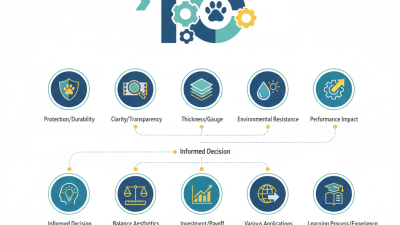
Before comparing suppliers, define the technical and commercial factors that matter most for your application. The chart below shows an example weighting for evaluating polyester shrink film requirements.
Use these priorities as a starting point, then confirm the required thickness, shrinkage direction, tensile strength, optical performance, sealing behavior, compliance documentation, and delivery capability with each supplier.
Compare Supplier Quality, Materials, and Production Capabilities
How to Choose the Best Polyester Shrink Film Supplier?
Choosing a polyester shrink film supplier requires more than comparing prices. Examine film clarity, thickness tolerance, shrinkage performance, tensile strength, and sealing behavior. A reliable supplier should provide recent test data, product specifications, and batch traceability. Ask whether the film suits your equipment, package shape, and expected storage conditions. Small differences matter. A film that wrinkles around a bottle can slow an entire packing line.
Material selection deserves careful attention. Confirm the polymer type, resin source, additives, and recommended temperature range. Some films offer strong clarity but may shrink unevenly on complex containers. Others run smoothly but provide weaker puncture resistance. I once focused too heavily on appearance and overlooked sealing consistency. That mistake made the comparison less useful. Suppliers should explain these trade-offs clearly, not hide them behind broad claims.
Tips:
Request samples from several production batches. Test them on your own machinery, then record shrinkage, haze, seal strength, and roll defects. Compare production capabilities, including line width, thickness control, slitting accuracy, printing support, minimum order quantity, and delivery capacity. Visit the facility when possible. Observe clean storage, inspection procedures, and how rejected rolls are handled. A supplier with strong equipment may still lack disciplined quality control. Ask difficult questions. Good answers should be specific, measurable, and supported by records.

 1Durch die gruppenweite Einführung und Harmonisierung unseres integrierten Managementsystems (IMS) werden alle bestehenden Unternehmens-, Qualitäts-, Umwelt- und Energiepolitiken durch diese Unternehmenspolitik ersetzt. Der Slogan „Textil hat Zukunft – auch in De