10 Best PETG Rolls for 3D Printing in 2026
Choosing the right Petg Roll can shape an entire 3D printing project. PETG is popular because it balances strength, flexibility, chemical resistance, and practical printability. Yet every roll behaves differently. Moisture, pigment, diameter consistency, spool design, and temperature requirements can change the final result. A glossy black roll may print differently from a transparent blue roll, even from the same brand.
Richard Horne, known in the 3D printing community as RichRap, offers a useful reminder: “Treat filament as a process variable, not just a product label.” That idea guides this selection. A reliable PETG roll should produce steady extrusion, clean bridges, firm layer bonding, and manageable stringing. It should also arrive dry and remain stable during storage. Small details matter. A poorly sealed bag can quietly ruin an otherwise excellent material.
This guide examines ten leading PETG rolls for 2026. Each option is considered through practical criteria, including dimensional accuracy, surface finish, print consistency, spool handling, and value. The testing focus is realistic rather than perfect. No filament wins every category. Some rolls prioritize clarity, while others favor impact strength or easy printing. A few may need more tuning than their marketing suggests. That is worth admitting. Printer condition, nozzle size, drying habits, and user expectations still influence the outcome. Use these recommendations as a starting point, then validate your choice with a temperature tower, retraction test, and small functional print. Performance should be measured, not assumed.
What Makes PETG Filament Suitable for 3D Printing
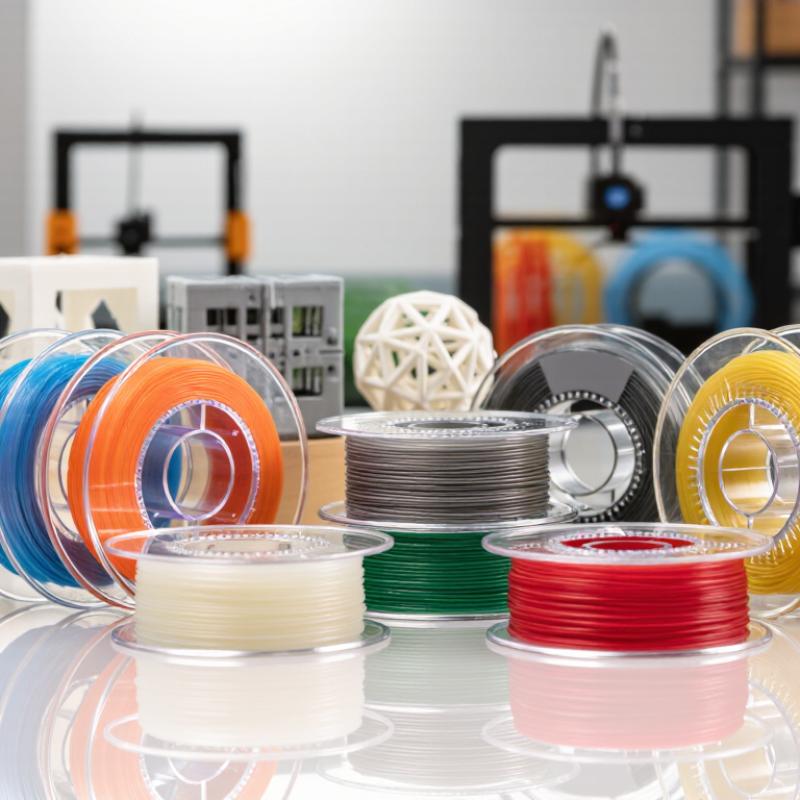
PETG is suitable for 3D printing because it combines strength with useful flexibility. In my workshop, printed PETG brackets survive drops that would crack many rigid plastics. It bends slightly before failing. That toughness helps with functional parts, protective covers, and tool organizers. It is not indestructible. Sharp impacts and poorly bonded layers can still cause fractures.
PETG also resists moisture, mild chemicals, and everyday heat better than many basic printing materials. A heated bed improves first-layer adhesion, while moderate cooling helps preserve layer strength. I usually dry the filament before demanding prints. Moisture can create bubbles, rough surfaces, and weak infill. A nozzle temperature near the manufacturer’s recommended range is a practical starting point, not a fixed rule. Small adjustments matter. A clean, level build plate matters more than expected.
Compared with PLA, PETG offers better impact resistance and higher heat tolerance, though it can be less forgiving during setup. Compared with ABS, it generally produces fewer fumes and less severe warping in ordinary indoor printing. Still, PETG can string between towers and cling too strongly to some surfaces. I once blamed the filament for messy corners, but my retraction settings were wrong. That mistake taught me to change one setting at a time. Dry storage, stable temperatures, and careful first-layer checks often make PETG more predictable.
How to Evaluate PETG Rolls for Quality and Performance
Evaluating PETG rolls starts with material consistency, not attractive packaging. Check the declared diameter and tolerance, then measure several points with calipers. A 1.75 mm filament should feed smoothly without visible thinning, ovality, or flattened sections. Spool winding matters too. Crossed layers can increase drag and cause under-extrusion during long prints. Keep the roll sealed with desiccant, because PETG absorbs moisture and may produce popping, cloudy surfaces, and weak layer bonding.
Use measurable evidence. ASTM D638 and ISO 527 provide recognized methods for comparing tensile strength and elongation, although printed results depend heavily on nozzle temperature, cooling, and layer direction. The Wohlers Report 2024 valued the global additive manufacturing industry at approximately $20.0 billion in 2023, after 13.5% growth. That expansion increases material choices, but it does not guarantee better quality. Ask for batch data, melt-flow information, and recommended drying conditions. A roll with stable melt flow usually gives more predictable walls and bridges. Still, manufacturer data can be incomplete. My own testing is not flawless. I would print a small calibration tower, inspect the first layer, and repeat the test after drying. Surface gloss can mislead. A strong-looking part may still split along layer lines. Weighing the spool before and after printing can also reveal whether the advertised net weight is realistic.
10 Best PETG Rolls for 3D Printing in 2026
How to Evaluate PETG Rolls for Quality and Performance
This comparison uses a 10-point evaluation scale based on practical PETG selection factors: dimensional consistency, moisture resistance, layer adhesion, surface finish, and printing stability. Higher scores indicate better expected performance when the filament is properly dried and stored in a sealed container.
Ten Recommended PETG Rolls for Different Printing Needs
PETG suits functional parts, workshop fixtures, and moisture-resistant prototypes.
The Wohlers Report 2024 valued global additive manufacturing at $20.035 billion in 2023, with 13.5% annual growth. That expansion increases demand for dependable polymer materials. These ten PETG roll profiles match different printing needs.
Choose a standard PETG roll for daily models. Select a high-flow roll for faster production. Use a low-warp roll for large enclosures. A clear roll fits light pipes and display parts. A matte roll hides layer lines better.
A reinforced roll supports tougher brackets. A flexible PETG blend helps with clips and hinges. A recycled-content roll suits lower-impact projects. A moisture-resistant roll helps in humid workshops. A precision-tolerance roll benefits small mechanical parts.
Every option has trade-offs. Clear filament often shows scars. Reinforced material may wear brass nozzles.
Tips: Dry PETG before printing, even when the spool looks new. A filament dryer near 55°C for several hours can reduce popping and weak layers. Keep the nozzle around 230–250°C, then tune by roll and machine. Prusa Research’s material guidance and ASTM F42 terminology stress process control, but real results still depend on cooling, speed, and storage. I would test a 20-gram calibration piece first. It costs less than discovering poor adhesion inside a full-size bracket.
Comparing PETG Rolls by Strength, Finish, and Ease of Use
PETG rolls remain popular because they balance strength, finish, and manageable printing. A 2025 Wohlers Report identifies polymers as a major material group in additive manufacturing, reflecting their wider production use. For roll selection, tensile performance matters more than advertising language. Under ISO 527 testing, typical PETG specimens show tensile strengths near 45–55 MPa, although layer direction and cooling can change results significantly.
Strength varies with nozzle temperature, wall count, and infill. A roll that prints cleanly at 245°C may become brittle at 225°C. For functional parts, choose consistent diameter and low moisture exposure. Moist PETG often produces popping sounds, rough walls, and weak bridges. Dry storage helps. A 0.20 mm layer height usually offers a practical balance between detail and durability, while three or four walls improve impact resistance better than simply raising infill.
Finish separates similar rolls. Clear PETG can produce bright edges, but tiny bubbles become highly visible. Matte material hides minor defects and looks less reflective. Not always. Glossy surfaces can reveal poor cooling, uneven extrusion, and careless retraction. I tend to overvalue appearance during testing, then regret it when a bracket flexes. Independent material datasets and ASTM D638-style testing also show that printed strength depends heavily on specimen preparation. Therefore, compare rolls using identical profiles, dried material, and the same test shape. Small differences in surface quality are useful, but repeatable strength is the more dependable buying signal.
10 Best PETG Rolls for 3D Printing in 2026 — Comparing PETG Rolls by Strength, Finish, and Ease of Use
| Rank |
Roll Profile |
Strength Focus |
Typical Tensile Strength |
Typical Impact Resistance |
Surface Finish |
Nozzle Temperature |
Build Plate Temperature |
Recommended Print Speed |
Moisture Sensitivity |
Ease of Use |
Best For |
| 1 |
Balanced Standard PETG |
High |
45–55 MPa |
Medium–high |
Glossy, uniform |
230–250°C |
70–85°C |
40–70 mm/s |
Moderate |
★★★★★ |
General-purpose parts, brackets, and functional prototypes |
| 2 |
High-Flow PETG |
High |
43–52 MPa |
Medium–high |
Smooth with good layer blending |
235–255°C |
70–85°C |
70–120 mm/s |
Moderate |
★★★★☆ |
Fast printing and large functional models |
| 3 |
Impact-Enhanced PETG |
Very high |
48–60 MPa |
High |
Satin to semi-gloss |
235–255°C |
75–90°C |
35–60 mm/s |
Moderate |
★★★★☆ |
Protective housings, clips, and parts exposed to repeated impacts |
| 4 |
Clear PETG |
Medium–high |
40–50 MPa |
Medium |
Transparent to translucent |
235–250°C |
70–85°C |
30–55 mm/s |
Moderate |
★★★☆☆ |
Light covers, display parts, containers, and translucent prototypes |
| 5 |
Matte PETG |
Medium–high |
40–50 MPa |
Medium |
Low-gloss, hides layer lines well |
230–250°C |
70–85°C |
35–65 mm/s |
Moderate |
★★★★☆ |
Presentation models, enclosures, and visually clean parts |
| 6 |
Silk-Finish PETG |
Medium |
35–45 MPa |
Medium |
Highly reflective, decorative |
235–255°C |
70–85°C |
30–50 mm/s |
Moderate–high |
★★★☆☆ |
Decorative models and appearance-focused prints |
| 7 |
Carbon-Fiber-Reinforced PETG |
Very high stiffness |
50–65 MPa |
Medium |
Textured, low-gloss |
240–270°C |
75–90°C |
25–50 mm/s |
Moderate |
★★★☆☆ |
Rigid mounts, tooling, and dimensionally stable components |
| 8 |
Recycled-Content PETG |
Medium–high |
38–50 MPa |
Medium |
Variable matte to semi-gloss |
230–250°C |
70–85°C |
35–60 mm/s |
Moderate–high |
★★★☆☆ |
Everyday prototypes and lower-impact material choices |
| 9 |
Low-Warp PETG |
High |
42–52 MPa |
Medium–high |
Even semi-gloss |
230–250°C |
70–85°C |
35–65 mm/s |
Moderate |
★★★★☆ |
Large flat parts and prints where dimensional consistency matters |
| 10 |
Easy-Print PETG |
Medium–high |
40–48 MPa |
Medium |
Clean semi-gloss |
225–245°C |
65–80°C |
35–65 mm/s |
Moderate |
★★★★★ |
Beginners, reliable first layers, and routine household parts |
Notes: PETG performance varies with formulation, color, moisture content, printer setup, and test method. The strength figures shown are representative ranges for standard 1.75 mm PETG products. Dry the filament at approximately 60–65°C for 4–6 hours when it has absorbed moisture, and always follow the material supplier’s recommended settings.
How to Choose and Store the Right PETG Roll
Choosing a PETG roll starts with the part, not the color.
Check the required strength, surface finish, flexibility, and heat resistance. A consistent 1.75 mm diameter helps maintain steady extrusion. Spool winding also matters. Crossed filament can cause sudden tension and failed prints. The Wohlers Report 2024 valued the global additive manufacturing industry at 20.035 billion dollars in 2023, showing why material control deserves professional attention. However, market growth does not guarantee every roll performs equally.
PETG absorbs moisture from air.
Wet filament may produce popping sounds, cloudy surfaces, weak layers, and thin strings. Store an opened roll in an airtight container with fresh desiccant. A humidity reading below 20% is a sensible working target. Keep the spool away from sunlight, dust, and radiators. For drying, follow the material supplier’s temperature profile, because excessive heat can deform the spool or fuse the filament. I once trusted a sealed bag too long. It was not truly dry.
Tips:
Record the roll’s opening date and drying cycles. Weigh it before important prints. Compare the printed diameter at several points. Use a dry box during long jobs. ASTM additive manufacturing terminology supports consistent process descriptions, but practical testing remains essential. A small temperature tower and retraction test can reveal more than a glossy product label. Some advice online sounds universal. It rarely is.

 1Durch die gruppenweite Einführung und Harmonisierung unseres integrierten Managementsystems (IMS) werden alle bestehenden Unternehmens-, Qualitäts-, Umwelt- und Energiepolitiken durch diese Unternehmenspolitik ersetzt. Der Slogan „Textil hat Zukunft – auch in De