China Top Laminating Film Types for Your Business Needs?
Laminating Film plays a crucial role in various industries. With the rise of packaging and printing demands, the market for laminating films continues to grow. A recent report by Smithers suggests that the laminating film market is projected to reach $10 billion globally by 2025. This growth reflects a strong trend towards high-quality, durable packaging solutions.
Different types of laminating films cater to unique business needs. For instance, thermal laminating films offer robust protection against moisture and wear. In contrast, pressure-sensitive films provide flexibility for quick applications. As industries evolve, understanding the right laminating film type is essential for enhancing product quality and extending shelf life.
However, businesses often face challenges in choosing the most suitable options. Limited knowledge can lead to poor decisions that compromise quality. It's vital for companies to stay informed about the latest advancements in laminating film technology. Only then can they fully capitalize on the benefits these materials offer.
Types of Laminating Films Commonly Used in China
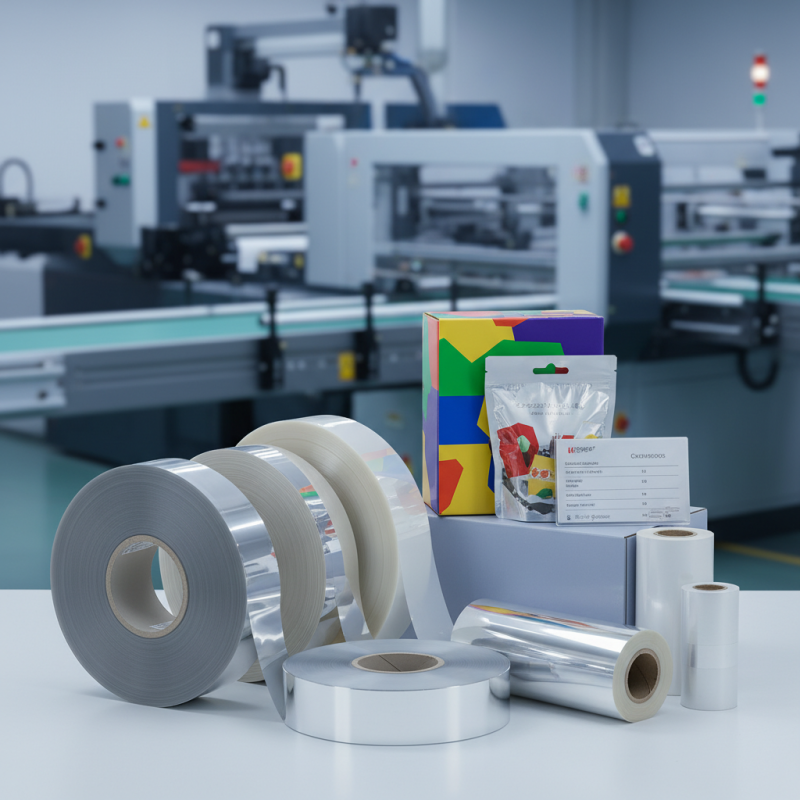
Laminating films are essential for many businesses in China. There are several types widely used in various industries. Each type has unique features and benefits, making it suitable for different applications.
The most common type is the thermal laminating film. It requires heat to bond the film to the printed material. This film offers a high gloss finish, enhancing the visual appeal. Another popular option is the cold laminating film, which does not require heat. It is easier to use and suitable for sensitive materials. This film provides a matte or glossy finish, depending on the choice.
Businesses may also explore specialty laminating films. For instance, anti-scratch and UV-resistant films are gaining traction. These films protect against wear and fading. However, some businesses might overlook the importance of choosing the right film for their specific needs. It’s vital to evaluate the intended use, budget, and desired finish before making a decision. Different applications demand distinct properties, and one type does not fit all.
Key Factors to Consider When Choosing Laminating Films
When selecting laminating films for your business, several key factors come into play. First, consider the thickness of the film. Industry reports indicate that films typically range from 1.5 mil to 10 mil. Thicker films often provide better durability and protection against wear and tear. This is crucial for items that will see heavy use, like menus or ID cards. However, using thicker films may increase costs. Balancing durability with budget constraints is essential.
Next, think about the finish you need. Options include gloss, matte, and satin finishes. Glossy films enhance color vibrancy, making them ideal for marketing materials. In contrast, matte films reduce glare, making them suitable for documents meant for reading. According to a market analysis by Smithers Pira, the demand for matte finishes has increased by 15% in recent years. This shift indicates changing preferences among consumers for a more sophisticated look.
Moreover, consider the environmental impact. Some laminating films are recyclable, while others are not. Data shows that eco-friendly films are gaining traction, with a 20% annual growth rate. More businesses are seeking sustainable options, reflecting a broader trend in corporate responsibility. A conscientious choice in laminating films can enhance your brand's reputation while aligning with consumer expectations for environmentally friendly products.
China Top Laminating Film Types for Your Business Needs - Key Factors to Consider When Choosing Laminating Films
| Film Type |
Thickness (micron) |
Finish |
Application |
Cost per Square Meter ($) |
| Standard Gloss |
80 |
Glossy |
Documents, Photos |
0.30 |
| Standard Matte |
80 |
Matte |
Documents, Menus |
0.32 |
| Heavy Duty Gloss |
125 |
Glossy |
ID Cards, Signage |
0.50 |
| Heavy Duty Matte |
125 |
Matte |
Menus, Premium Cards |
0.55 |
| Cold Lamination Film |
80 |
Glossy |
Heat-sensitive Prints |
0.40 |
Applications of Laminated Products Across Various Industries
Laminated products play a vital role in various industries.
The food sector, for instance, relies heavily on laminated packaging.
This packaging extends shelf life and enhances product safety. It’s essential for preserving freshness.
Laminated films prevent moisture and contaminants from affecting food integrity.
The healthcare industry also benefits significantly. Laminated materials are used in medical packaging.
These materials ensure sterility and safety for sensitive products. They help prevent contamination during transit.
Additionally, the retail world utilizes laminated films for product displays. High-quality displays attract customers and boost sales.
However, not all laminated products meet industry standards. Quality control is a continual challenge.
Some manufacturers struggle with consistency. It's crucial for businesses to choose reliable suppliers.
Understanding different film types is not always straightforward. Armed with knowledge, businesses can make informed choices
that enhance performance and reliability.
Comparative Analysis of PVC, PET, and OPP Laminating Films
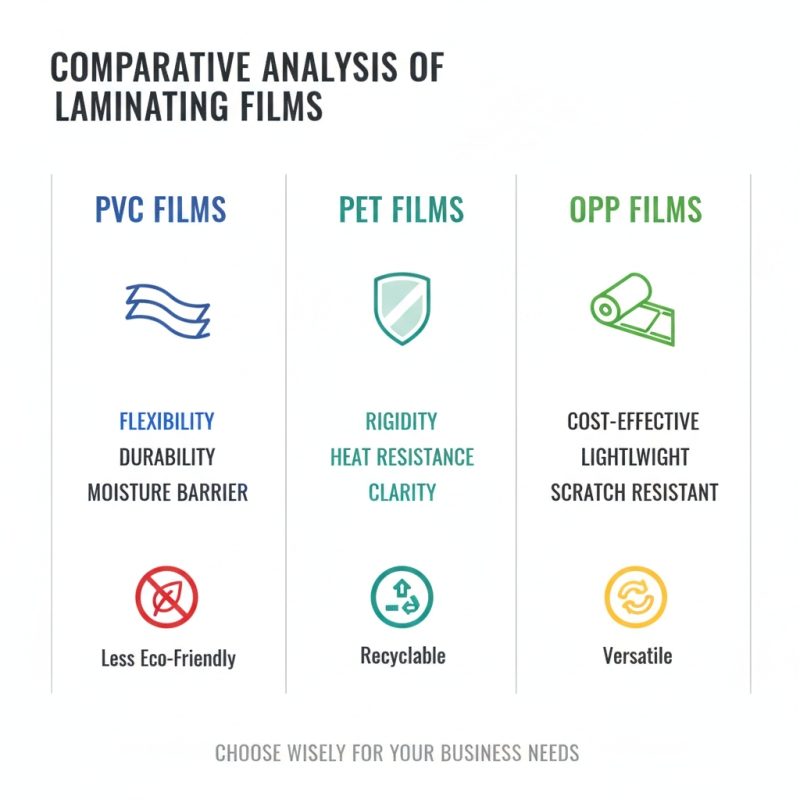
When choosing laminating films for your business, understanding the differences between PVC, PET, and OPP films is crucial. PVC films are known for their excellent flexibility and durability. They offer a strong barrier against moisture and dust. However, they can be less environmentally friendly due to their chemical composition.
PET films, on the other hand, are often favored for their optical clarity and strength. They are lightweight and can withstand high temperatures. This makes them popular for print projects requiring durability. Yet, they can sometimes be more challenging to laminate, which might lead to various inconsistencies in finished products.
OPP films are the most cost-effective option. They provide good transparency and are easy to process. But they may not offer the same level of protection as PVC or PET. Businesses should consider the specific needs before making a choice. Reflecting on how these films fit into environmental goals is also essential. Understanding each material's advantages and limitations helps in selecting the right film type for your business.
Sustainability Trends in the Laminating Film Industry in China
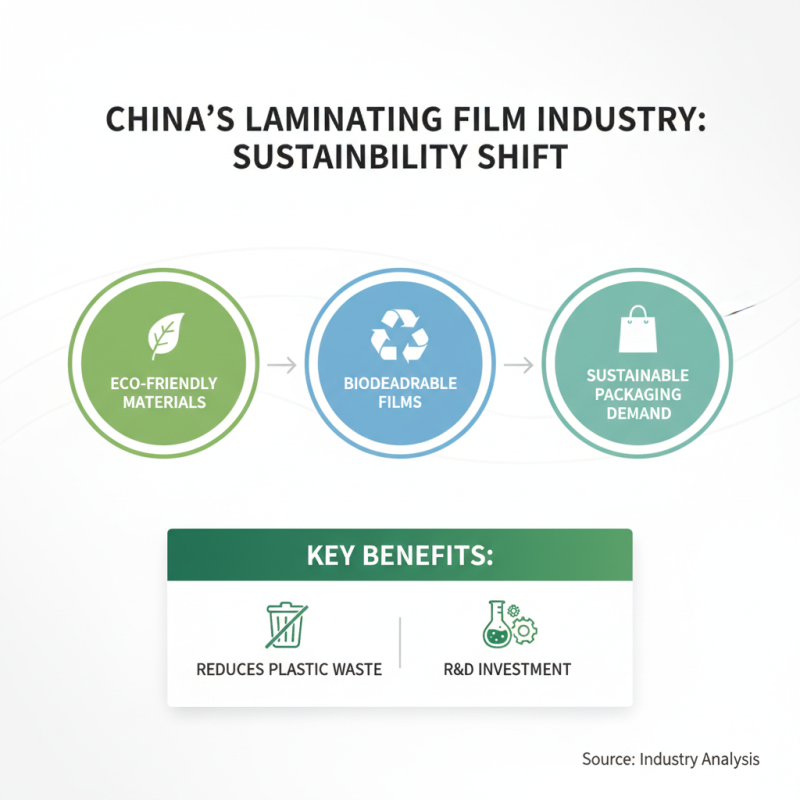
Sustainability is reshaping the laminating film industry in China. Many companies are exploring eco-friendly materials. These innovations address the growing demand for sustainable packaging. For example, biodegradable laminating films are gaining popularity. These products help reduce plastic waste. Manufacturers are investing in research to enhance these materials.
Moreover, regulations are tightening around plastic use. The government encourages businesses to adopt greener practices. This creates opportunities for companies to innovate. However, some manufacturers face challenges in sourcing sustainable raw materials. The transition from traditional laminating films is not always smooth. Companies must balance cost and performance while pursuing sustainability.
As consumers become more environmentally conscious, brands need to adapt. They are looking for packaging that reflects their values. Sustainable laminating films can improve brand image. However, not all films are created equal. Businesses should research their options carefully. The right choice can contribute to a better future for the planet.

 1Durch die gruppenweite Einführung und Harmonisierung unseres integrierten Managementsystems (IMS) werden alle bestehenden Unternehmens-, Qualitäts-, Umwelt- und Energiepolitiken durch diese Unternehmenspolitik ersetzt. Der Slogan „Textil hat Zukunft – auch in De