Top Polymer Sheet Types for Global Buyers
Global buyers are expanding their use of Polymer Sheet in construction, packaging, transport, healthcare, and industrial equipment. Material selection now involves more than price and thickness. Buyers must compare impact strength, chemical resistance, thermal stability, weight, machinability, and end-of-life options.
Plastics Europe reported global plastics production of approximately 413.8 million metric tonnes in 2023. The OECD estimated that 353 million tonnes of plastic waste were generated worldwide in 2019. These figures do not measure sheet demand directly. However, they show why responsible sourcing and material efficiency matter. A sheet that lasts longer may reduce replacement cycles, but recycling access remains uneven between markets.
Common choices include polycarbonate, acrylic, ABS, PVC, polyethylene, polypropylene, and high-density polyethylene sheet. Polycarbonate suits safety glazing and machine guards because it combines impact resistance with low weight. Acrylic offers strong optical clarity, although it can crack more easily under severe impact. ABS supports formed housings and panels, while HDPE performs well in tanks, liners, and moisture-exposed environments. Details decide value.
Chris DeArmitt, a plastics sustainability expert, has stated, “Plastic is not the problem; plastic pollution is the problem.” His point challenges a simple material-versus-material comparison. The better question concerns application, service life, processing, and recovery. Buyers should also verify datasheets, test methods, recycled content claims, certifications, and regional compliance. Some purchasing decisions still overemphasize unit cost. That weakness deserves reflection. A cheaper Polymer Sheet can become expensive after warping, cracking, or repeated replacement.
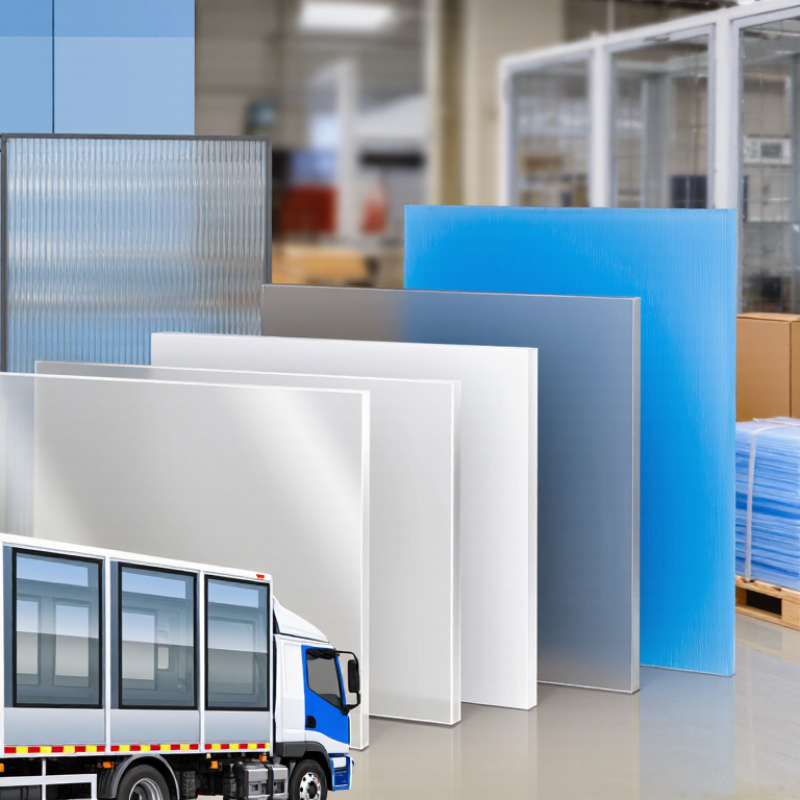
Polymer Sheet Basics: Composition, Properties, and Manufacturing Methods
Top Polymer Sheet Types for Global Buyers
Polymer sheets begin with a resin, but their final performance depends on additives and processing. Polyethylene offers chemical resistance and low moisture absorption. Polypropylene is light, stiff, and suitable for repeated cleaning. Polyvinyl chloride can provide rigidity or flexibility, depending on plasticizer content. Polycarbonate resists impact, while PETG supports clear forming and clean visual presentation. Composition matters more than a familiar material name.
Manufacturing changes the sheet’s behavior. Extrusion creates continuous sheets with controlled thickness and broad size options. Calendering forms plastic through heated rollers and suits flexible grades. Casting can improve optical clarity and surface quality. Compression molding works well for thicker, engineered sections. During procurement, check thickness tolerance, flatness, density, surface finish, and batch consistency. Small variations can affect cutting, bending, sealing, and assembly.
Temperature, chemicals, sunlight, and load should guide selection. A sheet that performs well indoors may warp outdoors. UV stabilizers help, but they do not solve every aging problem. Request test data, safety documentation, and production samples before committing to large volumes. Visual inspection is useful, though it cannot replace laboratory testing. No polymer sheet is perfect. Cost, performance, and processability often conflict. Even experienced buyers sometimes overvalue strength and overlook moisture, thermal expansion, or machining waste.
Top Polymer Sheet Types for Global Buyers
Polymer Sheet Basics: Composition, Properties, and Manufacturing Methods
Density is a useful comparison for material selection, shipping estimates, and structural design. Values shown are representative typical densities for commonly supplied polymer sheet materials; actual values vary with additives, grade, reinforcement, and processing conditions.
| Polymer Sheet Type |
Basic Composition |
Typical Properties |
Common Manufacturing Methods |
| LDPE |
Low-density polyethylene |
Flexible, moisture-resistant, good chemical resistance |
Sheet extrusion, calendaring |
| HDPE |
High-density polyethylene |
Stiffer, tough, low moisture absorption |
Sheet extrusion, compression molding |
| PP |
Polypropylene |
Low density, fatigue-resistant, good chemical resistance |
Sheet extrusion, thermoforming |
| Rigid PVC |
Unplasticized polyvinyl chloride |
Rigid, weatherable, corrosion-resistant |
Calendering, sheet extrusion |
| ABS |
Acrylonitrile, butadiene, and styrene blend |
Impact-resistant, rigid, easy to machine |
Sheet extrusion, thermoforming |
| PC |
Polycarbonate |
High impact strength, transparent, heat-resistant |
Sheet extrusion, co-extrusion |
| PMMA |
Polymethyl methacrylate |
High optical clarity, weather resistance, surface hardness |
Cell casting, sheet extrusion |
Key Polymer Sheet Types and Their Distinctive Characteristics
Top Polymer Sheet Types for Global Buyers
Key Polymer Sheet Types and Their Distinctive Characteristics
Polymer sheets differ in strength, clarity, flexibility, and chemical resistance. Choosing well starts with the working environment, not the lowest quoted price.
Polycarbonate sheets resist impact and remain useful near machinery, guards, and protective screens. They can handle demanding conditions, but surface scratching remains a concern.
Acrylic sheets provide bright transparency and a glass-like appearance. They suit displays, partitions, and light covers, although sudden impact may cause cracking.
Polyethylene sheets offer strong moisture resistance and a low-friction surface. High-density polyethylene works well for liners, tanks, and cutting surfaces.
Polypropylene sheets tolerate many chemicals and perform reliably in moderate heat.
Polyvinyl chloride sheets are available in rigid and flexible forms. They are practical for corrosion-resistant panels, but temperature limits require careful review.
This detail is easy to overlook.
For outdoor use, weather exposure deserves close attention. Some sheets need stabilizers or protective coatings to reduce ultraviolet damage. A buyer should request thickness tolerance, impact data, operating temperature, and test methods. Recycled content may support sustainability goals, yet it can affect color, consistency, and performance. Certificates help, but they do not replace sample testing. A small trial panel can reveal warping, drilling behavior, and edge quality before large-scale purchasing.
No sheet is universally best.
Even a technically suitable material may fail when storage, cutting, or installation is poorly controlled.
Performance Factors for Comparing Polymer Sheet Materials
Choosing polymer sheets requires more than comparing price and thickness. Mechanical strength, impact resistance, heat stability, and chemical compatibility often decide service life. A sheet that feels rigid in a warehouse may crack around drilled holes after repeated vibration. Check tensile data under ASTM or ISO methods, but remember that test conditions rarely match every field environment.
The PlasticsEurope Plastics: The Fast Facts 2023 report recorded 400.3 million tonnes of global plastic production in 2022. This scale supports broad material availability, yet it does not guarantee consistent sheet quality. Buyers should review density, thickness tolerance, moisture absorption, and batch certificates. Polycarbonate may suit impact-heavy guarding, while polyethylene can perform better where moisture and chemical exposure dominate. There is no universal winner.
Temperature deserves closer attention. Ask for continuous-use ratings, not only short-term softening points. Thermal expansion can loosen fasteners across a long panel. It is easy to overlook.
Sustainability is also a performance factor. The OECD Global Plastics Outlook reported 353 million tonnes of plastic waste in 2019, with only 9% recycled. Recycled content may reduce environmental impact, but it can also affect color, weldability, and consistency. That trade-off needs evidence, not slogans. Request recycled-content verification and compare samples after machining, bending, and outdoor exposure. My own caution is simple: a supplier’s datasheet starts the assessment; it should never finish it.
Global Applications and Industry-Specific Selection Criteria
Top Polymer Sheet Types for Global Buyers
Global Applications and Industry-Specific Selection Criteria
Start with the application. Food-processing equipment may require polypropylene or polyethylene sheets with suitable compliance documentation. Chemical tanks often need strong resistance to acids, solvents, or moisture. Polycarbonate suits impact-sensitive guards, while PETG supports clear fabricated parts. Heat, load, and cleaning methods can change the choice quickly.
Manufacturers should review operating temperature, thickness tolerance, surface finish, and expected service life. Outdoor projects also need weathering and ultraviolet resistance. In mining or bulk-material handling, abrasion resistance may matter more than visual clarity. For electrical components, insulation performance and dimensional stability deserve careful testing. A supplier’s technical data should be checked against the actual environment, not copied from a general catalog.
Price can mislead. A low-cost sheet may create extra machining waste, faster replacement, or difficult installation. My own first-pass selections have sometimes favored purchase cost too heavily. That approach needs correction. Buyers should request samples, review test methods, and confirm whether values describe continuous or short-term use. Local standards, import rules, recycling requirements, and available fabrication skills also influence selection. A technically excellent polymer can still fail commercially if local processors cannot cut, weld, or form it reliably. Availability matters.

 1Durch die gruppenweite Einführung und Harmonisierung unseres integrierten Managementsystems (IMS) werden alle bestehenden Unternehmens-, Qualitäts-, Umwelt- und Energiepolitiken durch diese Unternehmenspolitik ersetzt. Der Slogan „Textil hat Zukunft – auch in De